Fitness with calculation: how many calories you burn in the gym, outdoors and at home
Fitness has long been transformed into an exact science that uses knowledge from the fields of physiology, nutrition and medicine. Most modern sports clubs offer beginners to undergo special tests to correctly select the load. Calorie counting is based on formulas, often no simpler than in higher mathematics. However, fitness is still not a completely exact science. Energy expenditure depends not only on clear parameters such as age and weight, but also on the level of physical fitness, individual metabolic characteristics and current health status, which are difficult to express in exact numbers. Therefore, here are averaged data on calorie burn per hour of exercise for a woman 20–45 years old, weighing about 60 kg and with average fitness, as well as additional useful information.
Contents of the article:
- 1. Running on a treadmill
- 2. Running outdoors
- 3. Cross-country skiing
- 4. Walking on a treadmill, stepper or elliptical
- 5. Walking outside
- 6. Spinning/cycling classes
- 7. Biking
- 9. Aerobics, including dance
- 10. Strength aerobics
- 11. Mixed interval training
- 12. Strength training
- 13. Yoga and Pilates
- 14. Tennis
- 15. Squash
- 16. Swimming and water aerobics
- 18. Volleyball
- 19. Martial arts
- 17. Football and basketball
- 20. Bowling
- 21. Shopping
- 22. Cleaning the apartment
- 23. Washing dishes
- 24. Ironing
- 25. Cooking
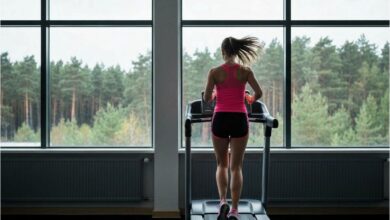
1. Running on a treadmill
- 500–700 kcal spent
- Features. This is one of the most effective aerobic practices that helps burn fat and strengthen the heart muscle. Treadmill running is running in place, which primarily activates the muscles of the back of the thighs and buttocks, and also, to a lesser extent, back muscles , press and hands.
- Risks. The main load is associated with jumping movements, which can negatively affect the joints. Impact loading contributes to wear of intervertebral discs and articular cartilage. However, modern treadmills are equipped with shock-absorbing surfaces that significantly reduce the impact of landing.
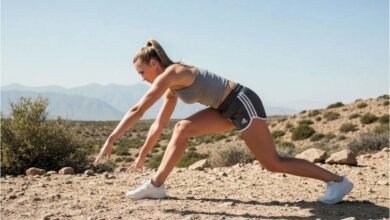
2. Running outdoors
- 450–600 kcal spent
- Features. When running outside, we move forward, so the quadriceps are actively involved in the work. In addition, you have to overcome air resistance, sometimes a headwind. You set the training pace yourself, which sometimes leads to its involuntary decrease.
- Risks. The main disadvantage is the hard asphalt surface. It is preferable to choose stadium rubber tracks, park alleys or forest paths. In addition, it is not recommended to run along the sides of roads with heavy traffic – the inhaled air contains harmful impurities, especially during active respiratory stress.
3. Cross-country skiing
- 500–600 kcal spent
- Features. This type of training is characterized by high intensity with a relatively low impact load due to the softness of the snow and skis. Almost all large muscle groups are involved – from the hands to the feet, coordination develops, and the cardiopulmonary system is strengthened.
- Risks. Difficulties are possible on mountain slopes and when using a “skate” driving style, if the technique is not yet sufficiently developed.
4. Walking on a treadmill, stepper or elliptical
- 350–450 kcal spent
- Features. Walking helps build endurance and strengthen the muscles in your legs and buttocks while minimizing impact. Working at the same time abdominal muscles and backs. The stepper and ellipsoid soften the impact when placing the foot even more.
- Risks. Walking is a fairly safe activity that is suitable for almost everyone. However, with increased stress, you can get injuries, such as sprains.
5. Walking outside
- 350–450 kcal spent
- Features. Intensity training on the street varies depending on the terrain, speed of movement, frequency of stops and changes of pace. Walking on rough terrain with changes in elevation is more effective than walking on a treadmill.
- Risks. Be sure to wear comfortable, well-cushioned shoes.
6. Spinning/cycling classes
- About 600 kcal spent
- Features. This is an energy-consuming and intense workout. Cyclic rotational movements of the pedals are performed according to the resistance mode specified by the instructor and the simulator. The teacher usually encourages you to work harder than you would do on your own. This is a group practice that promotes emotional engagement along with training the hamstrings, glutes, abs and back.
- Risks. Such exercises are not recommended for people with serious pathological conditions of the spine and knee joints.
7. Biking
- About 400 kcal spent
- Peculiarities. In many ways, you decide for yourself where to go and at what intensity. You can choose an easier route or use inertia, allowing you to start working only when necessary – so it is difficult to maintain a constant tension when riding a regular bike. At the same time, you need to cope with the wind heading towards you and climb the mountain, which has an excellent strengthening effect.
- Risks. Riding on old models without shock absorbers and with a vertical seat is especially harmful to the spine.
9. Aerobics, including dance
- 150–400 kcal spent
- Features. A coordination-challenging workout, the intensity of which varies from high – when jumping – to low, when one leg rests on a stable surface, such as the floor. Aerobics develops flexibility, coordination, and involves almost all muscle groups with emphasis depending on the style: the abs and buttocks – when belly dancing, the back and legs – in tango, deep stabilizer muscles – when exercising on unstable platforms.
- Risks. High vertical loads are not suitable for people with musculoskeletal problems and hypertension.
10. Strength aerobics
- About 350 kcal spent
- Features. Essentially strength exercises with light weights, performed at a fast pace with a large number of repetitions. This is training muscle endurance and improving relief.
- Risks. At high intensity there is a risk of injury – sprains, ligament tears. Such activities are not recommended for beginners.
11. Mixed interval training
- 350–400 kcal spent
- Features. This workout alternates aerobic and strength phases, which simultaneously improves cardio endurance and builds muscle mass
- risks. A very intense exercise that requires good physical shape.
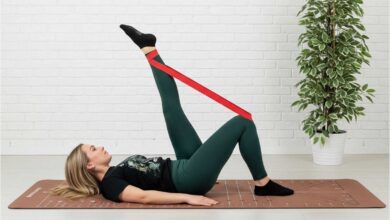
12. Strength training
- 200–350 kcal spent
- Features. Strength training equipment is aimed at developing strength and forming figures , not weight loss. To get an aerobic effect, you should do circuit training, alternately working different muscle groups in several cycles.
- Risks. The main emphasis is on the correct execution technique exercises poor technique, even with bodyweight, can lead to injury.
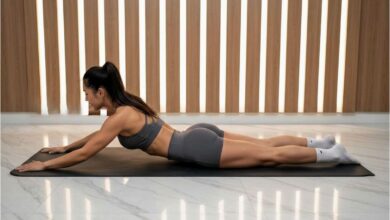
13. Yoga and Pilates
- About 300 kcal spent
- Features. These exercises are based on the principles of static muscle tension. The practice is not very easy, but it promotes flexibility and strengthens the small stabilizing muscles responsible for supporting internal organs and the harmonious functioning of the body.
- Risks. There are virtually no contraindications, with the exception of cases of high blood pressure.
14. Tennis
- About 400 kcal spent
- Features. An energy-intensive workout that includes running, changing rhythms, and punches. This activity develops the leg and arm muscles and improves heart function through sharp, explosive movements.
- Risks. Significant stress on the knee and ankle joints due to lateral movements. Furthermore, an imbalance in load between the left and right halves of the body is possible, which can lead to spinal curvature.
15. Squash
- 400–800 kcal burned
- Features. Although the game is similar to tennis, it is very different. The confined space, rapid movements in all directions, jumping, and intense racket swinging make this workout very energy-intensive—maintaining an aerobic fitness level is virtually impossible.
- Risks: High intensity can lead to fatigue and injury, especially without an experienced coach.
16. Swimming and water aerobics
- 350–400 kcal spent
- Specifics: Swimming is associated with moderate fatigue rather than high intensity. Most of the energy is expended on maintaining body temperature. A typical workout lasts about 45 minutes, after which fatigue or a feeling of cold sets in. Training in water strengthens the muscles of the arms, legs, abs, and especially the back, including the deep stabilizing muscles that help keep the body afloat. The aquatic environment creates resistance but softens impacts.
- Risks: Virtually none, except for the possible negative impact of chlorinated water on sensitive skin.
18. Volleyball
- About 350 kcal burned
- Characteristic features. A lot of stress is placed on the arms: they are constantly in motion and held in an elevated position. There are few active movements, but there are many jumping elements.
- Risks. The most vulnerable parts are the hands, elbows, and knees.
19. Martial Arts
- Expends 350–450 kcal
- Characteristics. Boxing and other martial arts require significant energy expenditure due to constant rapid movements, dodging, and striking. The muscles of the legs, arms, back, and abdominal muscles are engaged. Endurance, coordination, and flexibility of the body are improved.
- Risks. This is a fairly traumatic sport, so it is important to thoroughly master the technique to avoid injury.
17. Football and Basketball
- 350–500 kcal expended
- Characteristics. Constant changes in intensity—sharp sprints, stops, jumps, shots, and tackling the ball—make these sports similar to interval training. They are excellent for developing coordination and strengthening major muscle groups. Furthermore, these sports provide a strong adrenaline rush, making time fly by.
- Risks. High risk of injury during active play.
20. Bowling
- Burns 200–250 kcal
- Characteristics. The game involves the muscles of the arms, legs, back, and abs, but the load is concentrated on the dominant arm and supporting leg.
- Risks. Muscle strains can occur, so it is important to choose the right ball weight.
21. Shopping
- Expends 200–450 kcal
- Characteristics. You have to walk a lot, stand, bend, stand on tiptoes, turn, wave your arms, and change clothes frequently. All this is accompanied by strong emotions: doubts about whether to buy or not, whether the item fits, whether you like it.
- Risks. By the end of the walk, your legs may be very tired, and you will feel muscle pain the next day. Furthermore, an unsuccessful shopping trip can lead to short-term depression.
22. Cleaning an apartment
- Expends 200–250 kcal
- Characteristics. The result and intensity depend on the cleaning method—whether you wash the floor by hand or with a vacuum cleaner, or whether you dust with a cloth or brush. The main thing is how vigorously you perform the cleaning.
- Risks. Injuries from slipping on wet surfaces and shin sprains are possible.
23. Washing dishes
- Expends 160 kcal
- Characteristics. Mainly only the hands are used.
- Risks. Prolonged static positions cause fatigue, so it is recommended to regularly change positions and shift weight from one foot to the other.
24. Ironing
- Expends 150 kcal
- Characteristics. Low energy consumption is due to the fact that most of the work falls on the hands. You can increase the intensity by ironing while sitting on a fitball, but this requires skill and balance.
- Risks. Rocking too vigorously on a fitball can cause the iron to fall onto the carpet or damage clothing.
25. Cooking
- Expends 160 kcal
- Characteristics. Cooking requires many small movements: removing food, washing, chopping, and stirring. It’s important to remain attentive, careful, and precise throughout the entire process.
- Risks. There’s a temptation to offset calories burned by tasting ingredients and dishes at different stages of preparation.