10 Reasons to Use a Sleep Mask
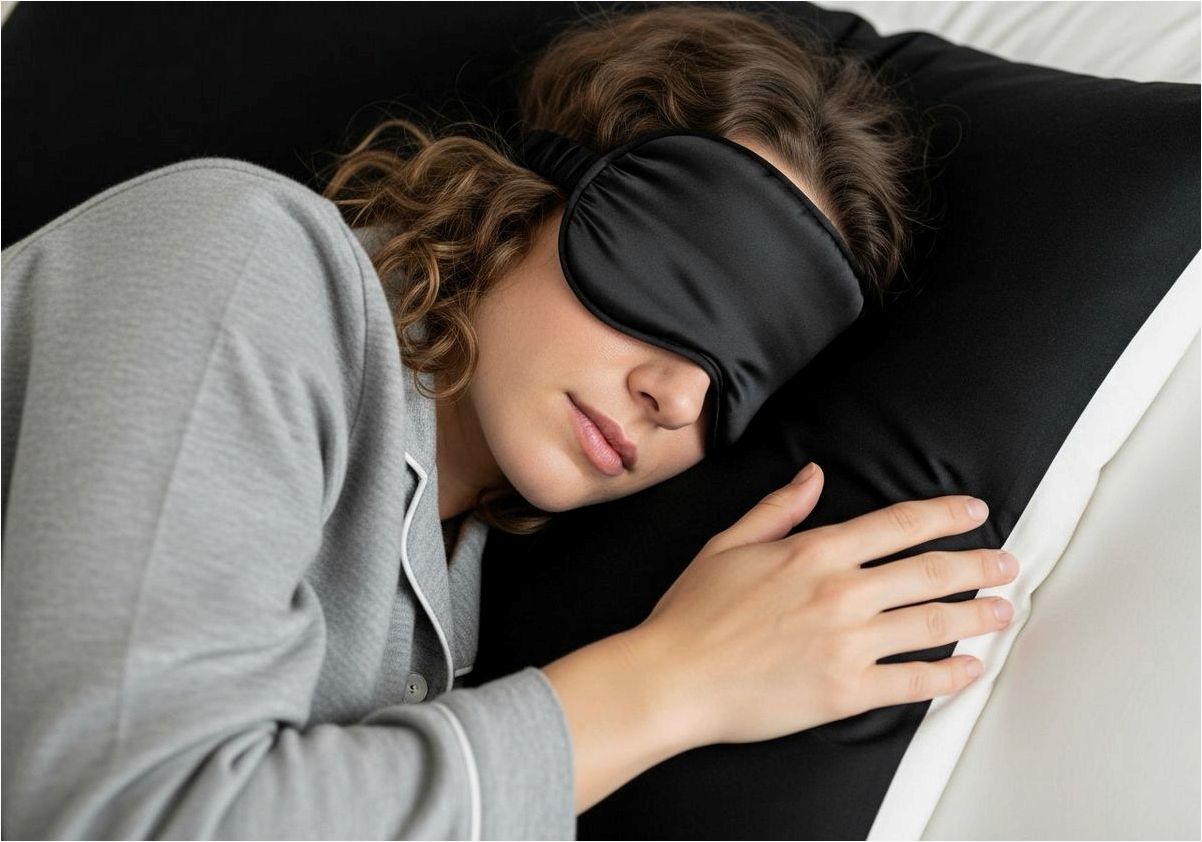
While there’s no one-size-fits-all solution for perfect sleep, using an eye mask can be a real lifesaver for those who toss and turn and wake up frequently at night. If you want to improve the quality of your rest, grab a mask and check out our recommendations.
Article Contents:
- 1. Protects your skin while you sleep
- 2. Reduces stress and tension
- 3. Promotes sound sleep while traveling
- 4. Helps reduce puffiness
- 5. Increases the duration of REM sleep
- 6. Creates complete darkness under any conditions
- 7. Helps restore the skin barrier
- 8. Helps maintain skin hydration
- 9. Hypoallergenic and antimicrobial properties
- 10. Restores the natural circadian rhythm
- Frequently Asked Questions
1. Protects your skin while you sleep
When you toss and turn in your sleep, your face is constantly in contact with your pillow, sheets, and blankets, which can compromise the skin’s barrier function and lead to inflammation. In addition, this friction can cause wrinkles by causing the skin to crease. The area around the eyes is particularly delicate and requires gentle care. Joshua Zeichner, a board-certified dermatologist and director of clinical research at Mount Sinai Hospital (New York), notes: “An eye mask acts as a protective layer that prevents skin damage caused by friction. During sleep, there is constant interaction between the skin and fabrics, and the force of friction can be significant.”
2. Reduces stress and tension
If you often notice that your face feels tense and you are prone to headaches or migraines, specialized eye masks can help alleviate these symptoms. According to David Rubin, head of product testing at Sleep Doctor: “Weighted masks are filled with small microbeads that apply gentle pressure to the face, which many people find relaxing. This is particularly effective for tension around the eyes, as well as for nighttime headaches and migraines.”
3. Promotes sound sleep while traveling
With a busy work schedule, frequent commutes, or while traveling, it can be difficult to get a good night’s sleep. A sleep mask helps you quickly switch to rest mode and improves sleep quality in unfamiliar surroundings. Thanks to its compact and portable design, it’s convenient to use on a plane, train, or in a car.
4. Helps reduce puffiness
One of the signs of sleep deprivation is facial puffiness and dark circles under the eyes. However, an eye mask can help address this issue! Joshua Zeichner explains: “Weighted masks apply gentle pressure to the skin under the eyes, helping to drain excess fluid that causes puffiness.” This effect reduces the appearance of dark circles caused by puffiness to some extent. He also notes that cooling masks help reduce inflammation by constricting blood vessels.
5. Increases the duration of REM sleep
Using eye masks helps improve the rapid eye movement (REM) phase, during which most dreaming occurs and about a quarter of total sleep time is spent. This phase is important for stimulating the areas of the brain responsible for learning and memory. David Rubin notes: “Masks create complete darkness, which ultimately improves sleep quality by eliminating light distractions.” Fewer nighttime awakenings lead to a longer REM phase.
6. Creates complete darkness under any conditions
Nothing disrupts sleep more than an unsuitable environment. If you’re easily affected by external stimuli, an eye mask will be your ally in blocking out light. It’s recommended to choose models that provide the deepest possible blackout, completely eliminating potential distractions.
7. Helps restore the skin barrier
According to Joshua Zeichner, during sleep, the skin has the opportunity to recover from daily damage. The importance of a good night’s rest cannot be underestimated: “If your mom ever told you to go to bed early—she was right! Lack of sleep keeps cortisol levels high, which hinders healing, breaks down the skin barrier, and triggers breakouts. All of this leads to inflammation and premature aging.”
8. Helps maintain skin hydration
Eye masks help maintain skin hydration by shielding the skin from external factors and enhancing the effectiveness of nighttime skincare products, such as eye creams. The effect largely depends on the mask’s material—for example, unlike cotton, silk does not absorb moisture from the skin and helps preserve its natural hydration throughout the night. In addition, silk and satin masks are pleasantly soft and minimize friction, whereas cotton can absorb both moisture and natural oils, leading to dryness around the eyes. As expert Shirazi notes: “Silk and satin provide optimal temperature regulation and help retain moisture, keeping the skin hydrated.”
9. Hypoallergenic and antimicrobial properties
Experts emphasize that natural silk masks not only have skin-care properties but also demonstrate hydrophobicity, hypoallergenicity, and antimicrobial activity. Silk is resistant to dust mites and bacteria, making it particularly suitable for sensitive skin and providing additional protection against irritation. Specialist Shirazi advises choosing only high-quality 100% mulberry silk.
10. Restores the natural circadian rhythm
Improving sleep can be as simple as the gentle touch of silk against the skin around your eyes. This contact helps regulate the body’s biological clock—the circadian rhythm. The gentle touch of silk stimulates serotonin production, improving mood, while the mask’s complete blackout effect increases melatonin levels, which regulate sleep cycles.
Frequently Asked Questions
Does the material the eye mask is made of matter? The mask’s material directly affects sleep quality and skin condition. Joshua Zeichner recommends choosing natural fibers, such as silk, which, on a microscopic level, has a gentle effect on the skin barrier. Synthetic fabrics, such as polyester, should be avoided, as they can rub against the skin, cause irritation, lead to wrinkles, and dry out the skin. It is important to choose breathable materials, especially for sensitive or acne-prone skin.
How often should you wash your sleep mask? It is recommended to clean your sleep mask thoroughly and regularly, considering that it remains on your face all night. Like any clothing that comes into contact with the skin, it should be washed frequently—perhaps daily—especially if you didn’t wash your face before bed or if you sweat heavily.
What should you look for when choosing a sleep mask? When purchasing one, consider the strap placement, your sleeping position, and the size. If you have sensitive ears or prefer to sleep on your side, choose a mask with a strap that won’t press against your ears. For those who frequently change positions while sleeping, models with an adjustable, snug-fitting strap are a good choice. Once you find a comfortable mask, don’t tighten it too much to avoid wrinkles and skin damage.