25 Fresh Training Methods
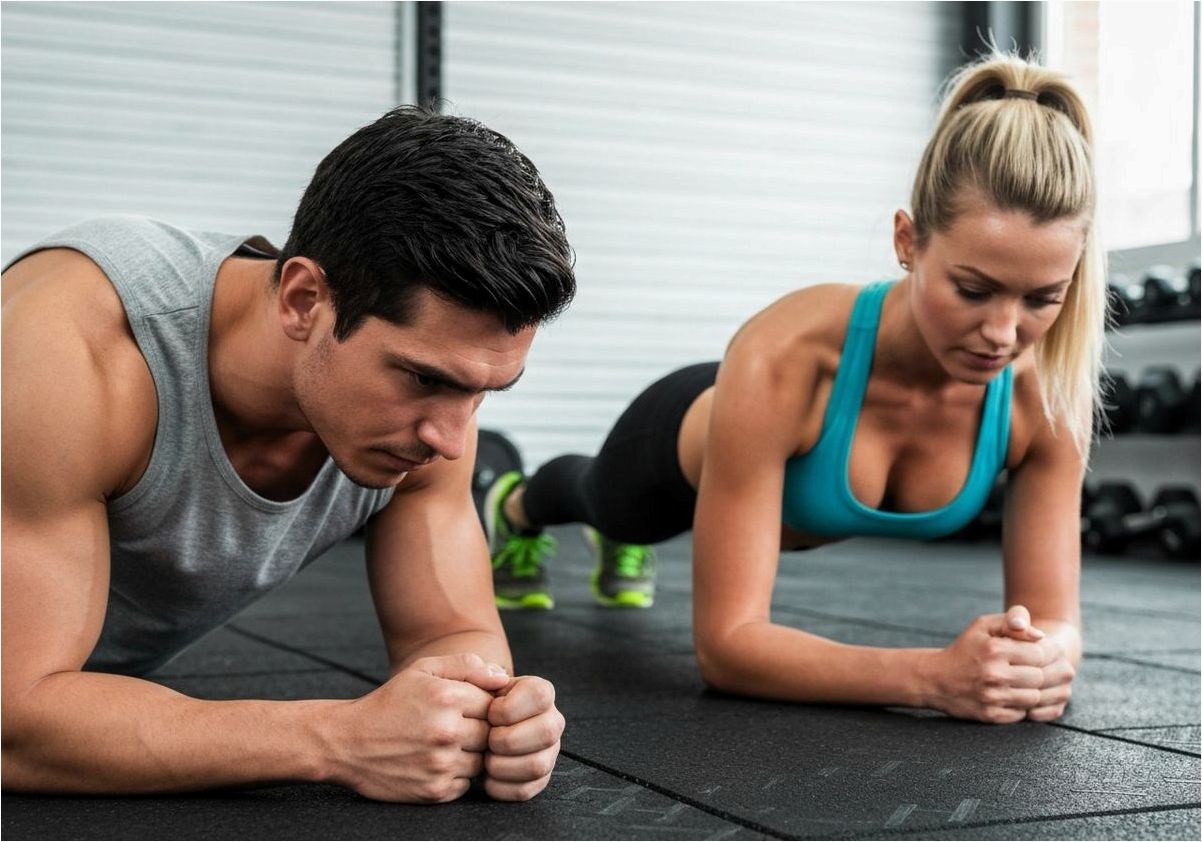
Small changes in your usual exercises can significantly increase the effectiveness of your exercises training and bring you closer to your desired shape. We have prepared a selection of tips that will help diversify more than twenty types exercises – from deadlifts to dumbbell curls. By introducing these innovations, you can present your body with an unusual stimulus!
Contents of the article:
- 1. Deadlift
- 2. Squats
- 3. Leg extensions
- 4. Leg press
- 5. Lifting dumbbells in front of you
- 6. Dumbbell Curls
- 7. Cardio training
- 8. Work on the elliptical trainer
- 9. Barbell curl
- 10. Calf raise
- 11. Leg Curl
- 12. Dumbbell Shoulder Press
- 13. Crunches
- 14. Triceps press with cable handle
- 15. French bench press
- 16. Handle pull on a high block
- 17. Hack squats
- 18. Vertical row with dumbbells
- 19. Bench press
- 20. Seated Wrist Curl
- 21. Scott Bench Curl
- 22. Overhead press
- 23. Twisting in the simulator
- 24. Bent-over side dumbbell raises
- 25. Push-ups
1. Deadlift
If you want to shift the load from your glutes to your back muscles, start each rep a little higher than normal. Raise the barbell, starting with the support on the racks located near your knees or just below. This approach reduces the load on the lower back and strengthens the work of the back muscles.
For more emphasis on your back, start the row from a higher starting position.
It is also important to follow the correct technique for performing the exercise: keep your back straight and do not round your lower back to avoid injury. Your foot steps should be shoulder-width apart and your grip should be about shoulder-width apart or slightly wider, depending on the variation of the pull. Control your movement both when raising and lowering the bar to ensure maximum efficiency and safety. For additional lumbar support, you can use a weightlifting belt.
2. Squats
At the bottom of the squat, briefly lean on a box or bench before returning to the starting position. Unlike standard squats, where the movement continuously changes direction, here each lift begins from a dead stop. This technique reduces pressure on the lower back and helps maintain an upright posture, as well as helping to achieve a parallel thigh level to the floor.
3. Leg extensions
Turn your toes inward so that the shoes touch each other – this will increase the load on the outer quadriceps. This way you specifically engage the inner part of the muscles. If you have no preference, try to alternate approaches with your toes turned inward and outward.
For maximum effectiveness of the exercise, ensure the correct technique: your back should be pressed tightly against the back of the machine, and the movement should be performed smoothly without jerking. It is not recommended to use too much weight – this can lead to incorrect execution and increased stress on the joints. The optimal number of repetitions per approach is 10-15, with an emphasis on high-quality muscle work.
It is also worth paying attention to breathing: inhale when lowering the legs to the starting position, exhale when extending. Regular exercise helps strengthen and shape the quadriceps, improve the stability of the knee joints and the overall functionality of the legs.
4. Leg press
Practice the exercise with one leg at a time. This method allows for maximum focus on each side, allowing for a wider range of motion. In this case, the weight can be halved, since each leg lifts the load separately.
Performing single leg presses also helps identify and correct muscle imbalances between the left and right legs. Pay attention to the correct position of the foot: the toe should be pointed forward or slightly to the sides to evenly distribute the load on the quadriceps, gluteal muscles and hips. It is not recommended to fully extend the knee at the top point to avoid overloading the joint and causing injury.
For best results, perform 3-4 sets of 10-15 repetitions on each leg, controlling your technique and breathing. This approach helps strength development , endurance and improved coordination of the muscles of the lower body.
5. Lifting dumbbells in front of you
Actively contract your glutes to stabilize your lower back and legs, preventing the technique from dissipating. This is the most reliable way to maintain control and efficiency of movement. At the end of the set, you can gradually relax your buttocks for additional repetitions. This strategy works for most standing exercises, including dumbbell curls, lateral raises, and overhead presses.
6. Dumbbell Curls
Perform the movements at a fast pace, using each arm at a time, and then slow down as you approach muscle failure. Acceleration is especially beneficial for isolation exercises, increasing the activity of fast-twitch muscle fibers. After this, do slow curls on the machine to engage the slow-twitch fibers.
It is also important to control the technique of performing the exercise: avoid sudden jerks and swings of the body in order to maximally load the biceps. It is recommended to keep your elbows motionless and press them towards your body. To vary the load, you can change the grip – a supinated grip (palms up) is considered classic for biceps, and a neutral grip (palms in) uses other muscle bundles.
Remember to choose the right weight – it should be enough to cause muscle fatigue, but not so heavy that technique deteriorates. The optimal number of repetitions for an accelerated tempo is 12-15, and for slow curls – 8-12 repetitions with greater control and a sense of load.
7. Cardio training
Change exercise equipment: replace the treadmill or exercise bike with a stepmill or rowing machine. At the same time, the load on the stepmill should remain moderate, and on the rowing machine – high. This alternating mode helps to burn more efficiently fat , and changing equipment diversifies training and involves different groups muscles on days with a small number of gym visitors, try exercising for a few minutes on four or more units at once.
8. Work on the elliptical trainer
Many ellipses allow you to move backwards, but we usually only circulate forwards. Reverse motion training activates the glutes and hamstrings more actively. Try incorporating both forward and reverse movements into your practice.
9. Barbell curl
Perform only the top part of the repetition, starting the movement from half the amplitude to the full range muscle contractions this technique maximally activates the biceps. If you do the exercise seated, allowing the barbell to rest on your hips at the beginning of the rep, you will automatically limit the range of motion to the top half.
10. Calf raise
At the top, hold for four seconds, squeezing as much as possible calf muscles many people underestimate the importance of such a pause, because the legs and feet get tired from low-intensity activity (for example, walking), and need stronger stimulation.
11. Leg Curl
During the exercise, pull your toes away from you, as if you were rising on your tiptoes. This relaxes your shins but maintains tension, forcing your hamstrings to work harder.
12. Dumbbell Shoulder Press
Try the Arnold Press instead of the classic one. Hold the dumbbells at shoulder level with your palms facing your body. Press them up while simultaneously rotating your palms forward. Return with a slow, controlled motion. This method actively engages all three parts of the deltoids.
13. Crunches
Raise your arms up as if reaching for the ceiling, and with each rep, move them slightly forward. Most people place their hands behind their heads, but for a more challenging exercise, use your own arm weight. Holding a medicine ball or weight plate in your hands during the crunch is even more effective. 14. Rope Triceps Press
14. Triceps press with cable handle
Lowering the handles below leg level further increases the load on the triceps.
15. Lying French Press
15. French bench press
16. High Cable Row Pull the handles as quickly as possible, but return them to the starting position slowly—about five seconds. Varying the speed of the movement increases the effectiveness of the workout. Your training partner can also add pressure during the negative portion of the repetition. 17. Hack Squats place your feet directly under your hips, mimicking a floor squat. We often place our feet too far forward, thereby shortening the range of motion. Proper foot placement activates the quadriceps more intensely and increases the range of motion.
16. Handle pull on a high block
Hold the dumbbells with your palms facing down and raise your elbows as high as possible. This better engages the medial deltoids and reduces pressure on the wrists. Use a comfortable weight and maintain proper form, focusing on raising your elbows.
17. Hack squats
After each full rep, perform an additional half-rep, lifting the barbell only halfway. The lower portion of the movement places more stress on the pectorals, so 1. 5 reps increase their emphasis while still allowing the upper body to work.
18. Vertical row with dumbbells
Allow the barbell to slowly slide across your palms to the base of your fingers at the start of the movement, then clench your fists tightly and lift the barbell. This technique develops grip strength. The additional wrist curls don’t require much effort, so it’s worth incorporating them to strengthen your wrists.
19. Bench press
Add chains to this exercise to increase resistance at the top of the movement, where the load typically decreases due to gravity. Or use a machine with a vertical pulley to provide constant resistance throughout the rep.
20. Seated Wrist Curl
Use an underhand or neutral grip. Pressing with your elbows pointed forward (instead of out to the sides) better isolates the anterior deltoids.
21. Scott Bench Curl
After two fast reps, do one slow rep. This helps maintain focus and avoid mechanical work, which is especially important when performing high-repetition, low-range exercises.
22. Overhead press
Keep your arms straight. While this is technically correct, a slight bend in your arms allows you to engage your back muscles more when lifting the weight, reducing the stress on your deltoids. Therefore, you can bend your arms slightly throughout the set to perform a few extra reps.
23. Twisting in the simulator
Push your arms explosively off the floor each time, then quickly return to the starting position, touching the surface. This plyometric element significantly challenges the standard exercise, making it more effective.