Thread lifting: advantages and disadvantages
Although new rejuvenation techniques are constantly emerging in the field of aesthetic medicine, thread lifting remains a popular procedure. However, many women who have tried this skin renewal method do not return to it again, finding the results insufficiently impressive. Together with cosmetologist Zarema Aliyeva, we explore the reasons behind these views.
Article Contents:
Advantages_of_the_Method
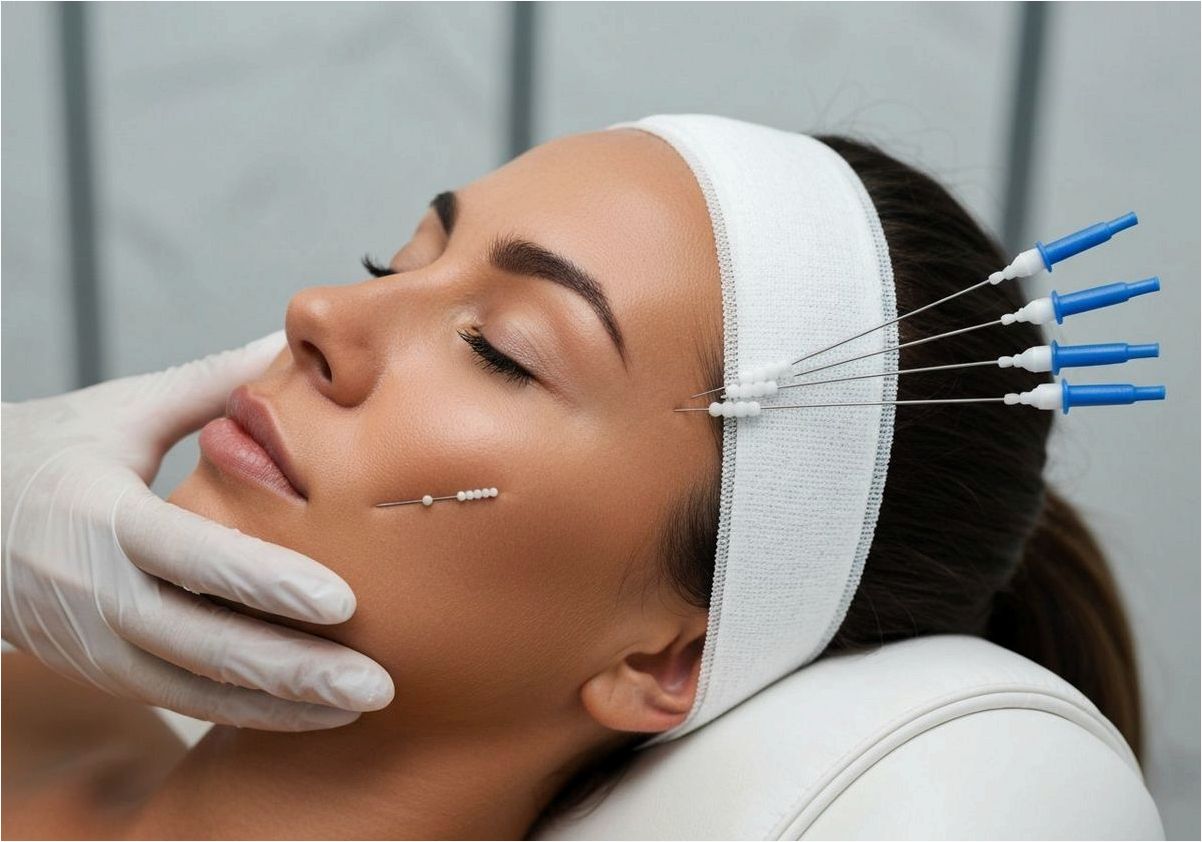
Minimal trauma. Thread lifting is a minimally invasive technique, which is a definite advantage. After inserting special threads, there is no lengthy recovery period. Visible results appear within 2-3 weeks. The procedure typically takes 1 to 2 hours and is performed under local anesthesia. Threads are inserted using special cannulas, which are less traumatic than microneedles, so the risk of bruising and puncture marks is much lower than with fillers.
Preservation of the natural facial structure. With proper thread placement, natural facial features are preserved as much as possible, and the lift is achieved without changing tissue volume. Furthermore, there is no risk of disrupting facial blood flow due to excessive injection of the product.
Affordable cost. Another advantage is the reasonable price of the procedure. Thread correction can be performed not only on the face, but also on the décolleté, shoulders, and lips. However, if the goal is to increase lip volume, thread lifting will not help—it focuses on reducing purse-string wrinkles and lifting the corners of the mouth.
Disadvantages of the Method
Short-term effect compared to other rejuvenation methods. Specialists typically expect results to last 2-3 years, but given individual body characteristics, metabolism, hormonal changes, weight fluctuations, and the natural aging process, the effect may last less than a year and a half.
The procedure is not suitable for everyone. It is effective only for mild cases of soft tissue ptosis and a thin layer of subcutaneous fat in the facial area, which explains the disappointment of many people who did not achieve the expected results.
Thread lifting is recommended in the early stages of age-related changes. Cosmetologists have many alternative methods for rejuvenation and prevention, so before making a decision, it is important to carefully evaluate the pros and cons, consult a specialist, and choose the optimal method. This can include thread lifting or hardware-based procedures (phototherapy, focused ultrasound, microneedling RF lifting, CO2 laser resurfacing), which not only tighten tissue but also improve skin condition and help treat fine wrinkles and pigmentation.
There are two types of threads: absorbable (which makes them similar to fillers) and non-absorbable. If you have permanent threads inserted but later decide to undergo a surgical SMAS lift, temporal lift, or forehead lift, they will need to be surgically removed.
The risk of facial asymmetry due to thread lifting is real. Therefore, it is extremely important to carefully select a specialist. They should not only have a higher medical education but also the appropriate certifications confirming their right to perform this procedure and work with the selected threads. It is advisable for the doctor to have significant experience specifically in thread insertion.Possible side effects and complications. These include swelling, bruising, redness, and soreness at the thread placement sites. In rare cases, inflammation, granuloma formation, or thread migration may develop, requiring a repeat procedure. It is important to follow all of your doctor’s recommendations during the postoperative period to minimize the risk of complications.
Age and skin condition restrictions. Thread lifting is not recommended for those with pronounced sagging and drooping facial contours, large wrinkles, and deep ptosis, as well as those with chronic skin conditions or autoimmune disorders. In such cases, the effectiveness of the method is significantly reduced, and it is better to consider alternative correction methods.
Cost of the procedure. The cost of thread lifting can be quite high, especially when using high-quality materials and an experienced specialist. Furthermore, to maintain a lasting effect, repeat procedures may be necessary after several years, which should be taken into account when planning your budget.
Requirements for the recovery period. After thread placement, slight swelling and redness may persist, which usually subsides within 5-7 days. During this time, it is recommended to avoid intense physical activity, sauna visits, and excessive sun exposure, which can be inconvenient for an active lifestyle.
Technologies and types of threads for lifting
Choose threads based on your goals and desired lifting result. The most common technologies include absorbable and non-absorbable materials. Absorbable threads made of polydioxanone (PDO), polylactic acid (PLA), and polycaprolactone (PCL) stimulate collagen production. These threads gradually dissolve in the body over 6-12 months, maintaining the lifting effect for up to 1.5-2 years.
Non-absorbable polypropylene threads maintain their structure for a long time, providing stable mechanical support. They are used for severe tissue ptosis, but the risk of knot formation and infection if improperly inserted should be considered.
By design, threads are classified as smooth, barbed, and hooked. Smooth threads are suitable for stimulating collagen without significantly lifting tissue and are used to correct fine wrinkles and improve skin texture. Barbed threads provide a moderate lift by adhering to the tissue, while hooked threads securely anchor the skin layers, providing an immediate and noticeable lifting effect.
It is recommended to select certified threads, taking into account the doctor’s experience and individual skin characteristics. Modern thread placement devices minimize trauma and improve the precision of the procedure. It is important to consider skin type, thread depth, and the treatment area to achieve lasting results without complications.