Water Workout: For Beginners and Experienced
“The main advantage of training in a pool is the high density of water, which creates resistance 12 times greater than air,” shares Igor Porsensula, creator of the Los Angeles-based Boot Camp H2O workout. “This means that during these exercises, you engage significantly more muscle fibers and burn a significant number of calories.” Article Contents: water Warm-Up
Side Burpees in Water
- Water Taxi
- Tombstone Kick
- Dolphin Tail
- Washboard
- Upright Breaststroke
- Helpful Tips for Effective Water Workouts
- Why Water Workouts Are Beneficial for Everyone
- Safety Tips for Water Workouts
- Workout Plan: Perform the 7 water exercises below (see Option 1), repeating the sequence twice. Practice 2 to 4 times per week
- What you’ll need: A pool and a kickboard
- water warm-up
- Activates the muscles of the shoulders, arms, abs, and hips.
Water Taxi
To make the exercise easier, hold the position for a minute instead of pulling your legs toward your chest.
Water side burpees
Target the rectus abdominis and obliques, as well as the muscles of the thighs and legs. In deep water: Grasp the edge of the pool with your right hand, turning your body perpendicular to the edge. Bend your legs together and pull them toward your chest, bringing them closer to the surface of the water. Push off the wall with your feet, straighten your legs, and using your abs, hold your body level with the surface in a side plank position for as long as possible. Continue for one minute, then switch sides.
Tombstone Kick
“Water Taxi” Works the muscles of the back, shoulders, arms, chest, and abs can be performed in deep or shallow water: sit on a swimming board, close your knees (feet can lightly touch the bottom or hang freely). Straighten your arms in front of you, turning your palms in different directions, and begin to row. Swim along the length of the pool for 30 seconds, then change the direction of your palms and swim back for another 30 seconds.
Focus on maximizing the retraction and extension of your shoulder blades during your strokes Tombstone kick work the muscles of the back, arms, abs, buttocks and legs.
In water of any depth: take a swim board and stand with your back to the side of the pool. Hold the board at arm’s length in front of you vertically, half submerged in water. Push off the side with your feet and, continuing to hold the board in the same position, swim forward, working with your legs using the crawl technique. The lesson lasts 60 seconds.
Dolphin Tail
“Dolphin’s Tail”
The abdominal and leg muscles are worked.
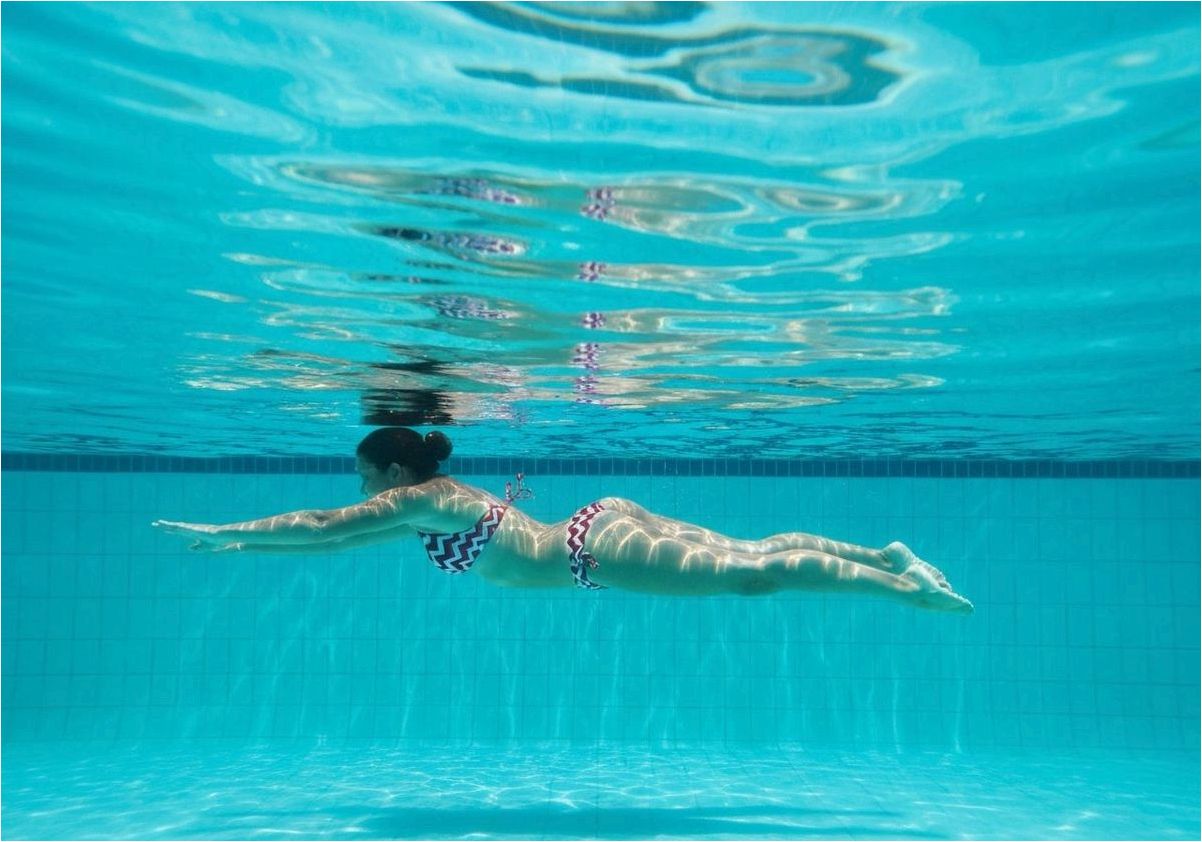
In deep water: spread your arms to the sides, legs down freely. Straining
Washboard
, close your legs and sharply move them back, slightly bending your knees. Then smoothly extend forward, straightening your legs completely – reminiscent of a dolphin’s fin. Maintain balance by swinging your arms in the opposite direction. Continue the exercise for one minute.
You need to move, starting with tension in the core muscles, the body should work like a whip: the movement of the legs does not precede the work of the center.
“Washboard”
Upright Breaststroke
In deep or shallow water: Grab your paddle board, spread your feet wide, and lean forward at an angle of about 45 degrees. The back remains straight, the arms are bent at the elbows and pointed back, holding the board in front of the chest. Press the board down diagonally with your arms fully extended, then pull the board back up as you would for a bicep curl. Perform continuously for a minute.
Try to minimize water splashing to better concentrate on your work arm muscles and hulls.
Vertical breaststroke
Helpful Tips for Effective Water Workouts
In deep water: Take the board and hold it above your head with your feet hanging down freely. Lift your knees up (toes pointing towards you), and then sharply straighten your legs down diagonally, pushing your body out of the water. Do the exercise for 1 minute.
If it is difficult to hold the board above your head, put it aside and simply raise your arms up or spread them out to the sides on the surface of the water.
Helpful tips for effective training in water Warm up and cool down. It is important to always start your workout with a warm-up and end with a cool-down in the water to prepare your muscles for the load and reduce the risk of injury correct breathing. Watch your breathing: it should be even and deep. This will help increase endurance and provide oxygen to the muscles.
Why Water Workouts Are Beneficial for Everyone
Buoyancy and body control. Control your body position and breathing, and maintain buoyancy to maximize exercise effectiveness and minimize stress on your joints.
Load progression. Start with low reps and gradually increase intensity and duration to avoid overtraining.
Safety. Be sure to consult your doctor before starting exercise, especially if you have chronic illnesses or joint problems.
Safety Tips for Water Workouts
- Water activities are suitable for both beginners and experienced athletes. Water reduces the load on the joints and spine, which makes training safe even in the presence of injuries or chronic diseases. The added resistance of the water helps strengthen muscles, improve coordination and flexibility. In addition, training in water helps improve the functioning of the cardiovascular system and maintains the overall tone of the body.
- Safety Tips for Water Exercises
- Always monitor your level of fatigue and stop exercising if you notice signs of severe muscle tension or difficulty breathing. It’s better to take a break than risk your health.
- Before exercise, do a short warm-up on land – this will improve blood circulation and reduce the likelihood of cramps during exercise in the water.
- Check the water temperature: the optimal range for exercise is +26–29 °C. Cold water causes muscle spasms, and excessively warm water accelerates fatigue.
- Use special floating belts or arm sleeves if you want to practice new exercises or stay on the surface for a long time. They will help prevent panic when your strength decreases.
Workout Plan: Perform the 7 water exercises below (see Option 1), repeating the sequence twice. Practice 2 to 4 times per week.
If you feel dizzy, nauseous or short of breath, stop training immediately and go ashore to rest.
What you’ll need: A pool and a kickboard.
Monitor the technical condition of the equipment – swimming boards, shovels and other accessories must be in good working order and suitable in size.
Water training: for beginners and experienced