How to Choose the Perfect Running Shoes This Spring
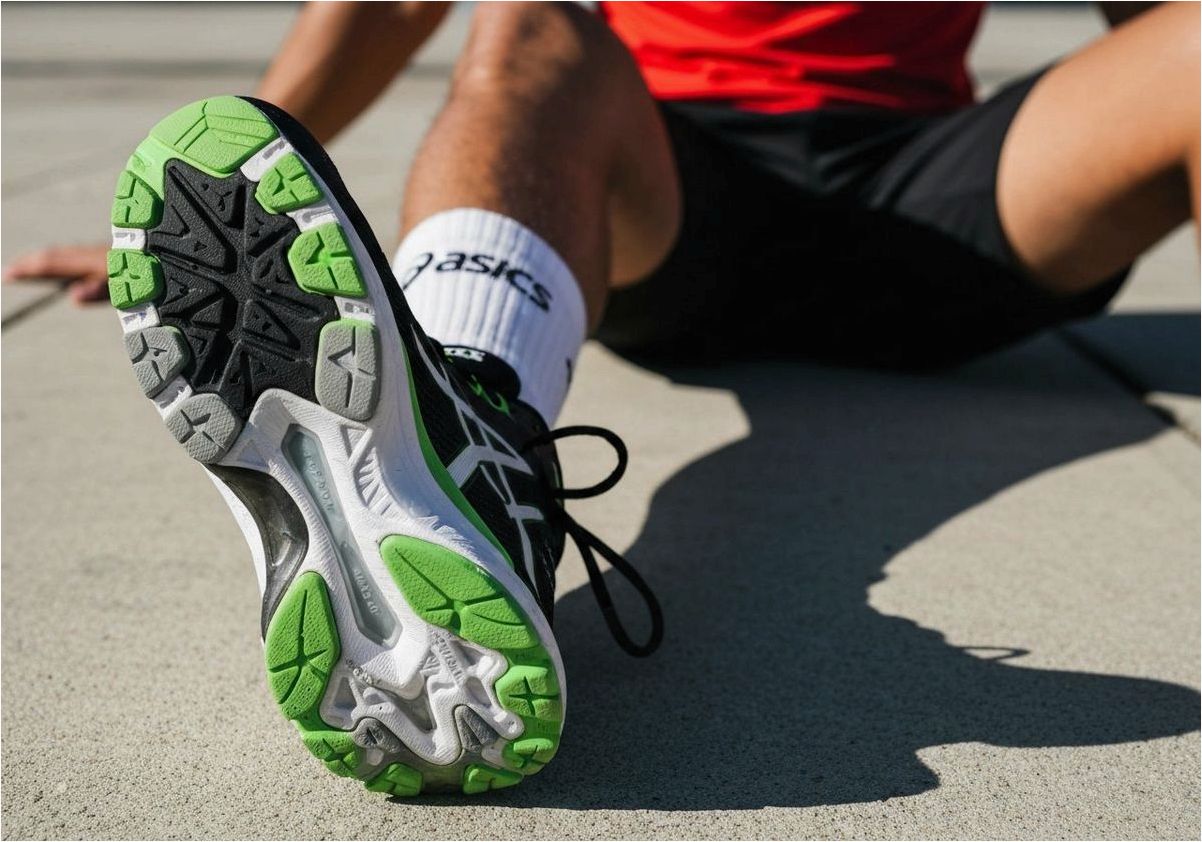
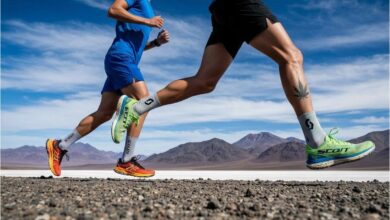
One of the main benefits of running is its accessibility: all you need is a good pair of running shoes, and you’re ready to hit the trails.
Article Contents:
Of course, running itself doesn’t require any special skills, but choosing the right shoes is a much more challenging task, especially if you’re just starting out.
The vast number of running shoe brands and complex terminology (such as pronation and supination) make finding the right model significantly more challenging.
How to Choose the Perfect Running Shoes for Your Needs
The first step is to visit a running store to try on shoes that fit perfectly. Here, experienced consultants, well-versed in the specifics of various running styles and shoe models, will help you choose a pair. They’ll help you avoid confusion caused by the vast selection and numerous technical terms.
A visit to the store is also an opportunity to have your gait analyzed, which can be difficult to do on your own. This is especially helpful for beginners: salespeople will analyze your walking and running style to select shoes that support your foot’s natural movement. You’ll likely be asked to jog on a treadmill or in the store to determine your individual stride pattern. Some stores use 3D foot scanning, which allows for precise measurements—length, width, and arch height—to select a virtually customized pair. A shopping tip: wear comfortable clothing that allows for freedom of movement.
As a running enthusiast, consultants are usually well-versed in the various brands and their features. They’ll help you focus on what really matters—fit and support—not just looks or fashionable details.
Running shoes can have eye-catching designs with bright reflective elements, unusual materials, or interesting outsole curves, but the most important criteria remain a comfortable fit and comfort for your foot, followed by style and individuality.
Additional tips for choosing running shoes:
- Consider your foot type. There are three main types: flat feet, normal and high arches. For each of them, different shoe models with varying degrees of support and shock absorption are suitable.
- Pay attention to depreciation. The higher your weight and the intensity of your training, the more important it is to have quality cushioning, which reduces the impact on your joints and spine.
- Choose the right size. There should be approximately 0. 5-1 cm between the long toe and the toe of the sneaker for comfortable movement and to prevent chafing when running
- test the shoes before you buy. Run in a new copy on different surfaces – in a store or on the street. Pay attention to the absence of discomfort, stability and quality of grip of the sole.
- Don’t forget about seasonality. For winter conditions there are special models with insulated materials and better grip, and for summer there are lighter and more breathable options.
- Consider your running style. Some runners prefer minimalist shoes that are closer to barefoot running, while others prefer models with maximum support and stability.
- Be aware of the lifespan of your sneakers. Typically, running shoes last between 500 and 800 km, after which the cushioning and support decrease and it’s time to consider a new pair.
Choosing the right running shoes affects not only your comfort during training, but also the prevention of injury, so approach this process responsibly and with patience.
Key points to consider when choosing running shoes
Before you invest in a new pair, decide where you plan to run. Do you run on asphalt in the park or prefer rugged forest paths? Do you want to train for a marathon or are you going to train several times a week to stay healthy?
The choice depends on the goals and conditions in which the training will take place, so consider the key characteristics that affect the safety and effectiveness of the training.
Running Surface Type
Each running zone has its own shoe requirements. Thus, running on the sidewalk puts a lot of stress on the joints, which is different from running on a professional treadmill surface. For running on forest trails, sneakers should have a stiffer and more textured sole with a pronounced tread to protect against stones and branches, as well as provide traction.
Size and Fit
Some brands produce women’s models up to size 45 (for example, Hilma, a brand of women’s running shoes). If you are larger than a women’s size 12, it is worth considering the men’s options, as the difference between sizes is usually about 1. 5 units. For example, a female 12 would be approximately a male 10. 5.
It is important to remember that feet swell slightly during exercise and in warm weather, so you should not buy sneakers with a minimum margin (an ideal “spare fit”). It is better to choose shoes that are about half a size larger than usual, so that the foot can move freely and without discomfort, but does not dangle.
Shoe Construction
- Ankle collar is a soft, padded area of the upper that secures the heel. In some models it is more voluminous and higher, in others the support is achieved by shape rather than filling. Make sure that the heel does not slip, that the cuff fits comfortably and does not rub the sides of the ankle.
- Heel counter – a rigid inner cup at the back that secures the heel. Sometimes there is an external pad that performs the same function – it supports and stabilizes the heel, which helps to avoid unnecessary movement of the foot. While these details don’t always provide extra control, they do provide comfort and stability.
- Toebox – covers the front of the shoe. It is often reinforced with a special bumper that protects fingers from injury and abrasion of the fabric. It is very important that the toe is wide enough, does not squeeze the fingers and allows them to bend and unbend freely in all directions. It is ideal if each finger feels comfortable and does not experience pressure.
Support Level
The choice of support depends not only on personal preference, but also on the condition of your joints. Running can place 3-4 times your body weight on your joints, so cushioning and support are key to preventing injury and keeping your feet healthy. It is important to find a balance between stability and comfort.
For beginners, shoes with good cushioning and support are recommended, as the joints need time to get used to the new loads and movements.
Experienced runners often experiment with minimalist shoes with a thin layer of cushioning, reminiscent of barefoot running. These shoes increase the load on the leg muscles, strengthening them as they work more actively, absorbing shock and stabilizing movements. A study published in Nature found that foot strength increased by an average of 57. 4% after six months of regularly wearing minimalist shoes. However, it is not suitable for long runs.
Pronation and Foot Features
Pronation is a natural shock absorption mechanism in which the foot rolls slightly inward to distribute weight when it hits the ground. You may have overpronation (the foot turns inward too much), the opposite case – underpronation (the outer part of the heel makes contact with the surface first), or neutral pronation (the foot touches the surface completely).
For severe pronation, stability-enhancing shoes are recommended to improve technique and prevent injury. If pronation is weak, you need to choose shoes with good shock absorption and a low profile to reduce the load on your feet and joints.
If you have diagnoses like plantar fasciitis (inflammation of the ligament on the bottom of the foot) or flat feet, be sure to take this into account when choosing shoes.
How to Test New Running Shoes
After purchasing, be sure to test the sneakers in different conditions: walking, light jogging, sprints in the park, or running on a treadmill. Pay attention to the sensations – whether there is tension, discomfort or pain. Often shoes look comfortable in the store, but become uncomfortable on the run. If pain occurs, it is better to return the pair and choose another model. Fortunately, many stores and brands today offer flexible return policies that allow you to evaluate the comfort of your shoes for a month or more without penalty.
Please remember that running shoes have a limited lifespan. With regular training, their service life is usually from four to six months or a mileage in the range from 180 to 300 kilometers. Pay attention to any signs of wear, especially if the sole becomes thinner in areas where the foot bears the most stress – near the ball of the toe or along the outer edge of the heel. Such changes serve as a signal that the shoes have practically served their purpose. It is recommended to keep a running diary or record data on a mobile device to monitor the duration of use of running shoes and promptly update them with new ones.