A fitball instead of a regular chair
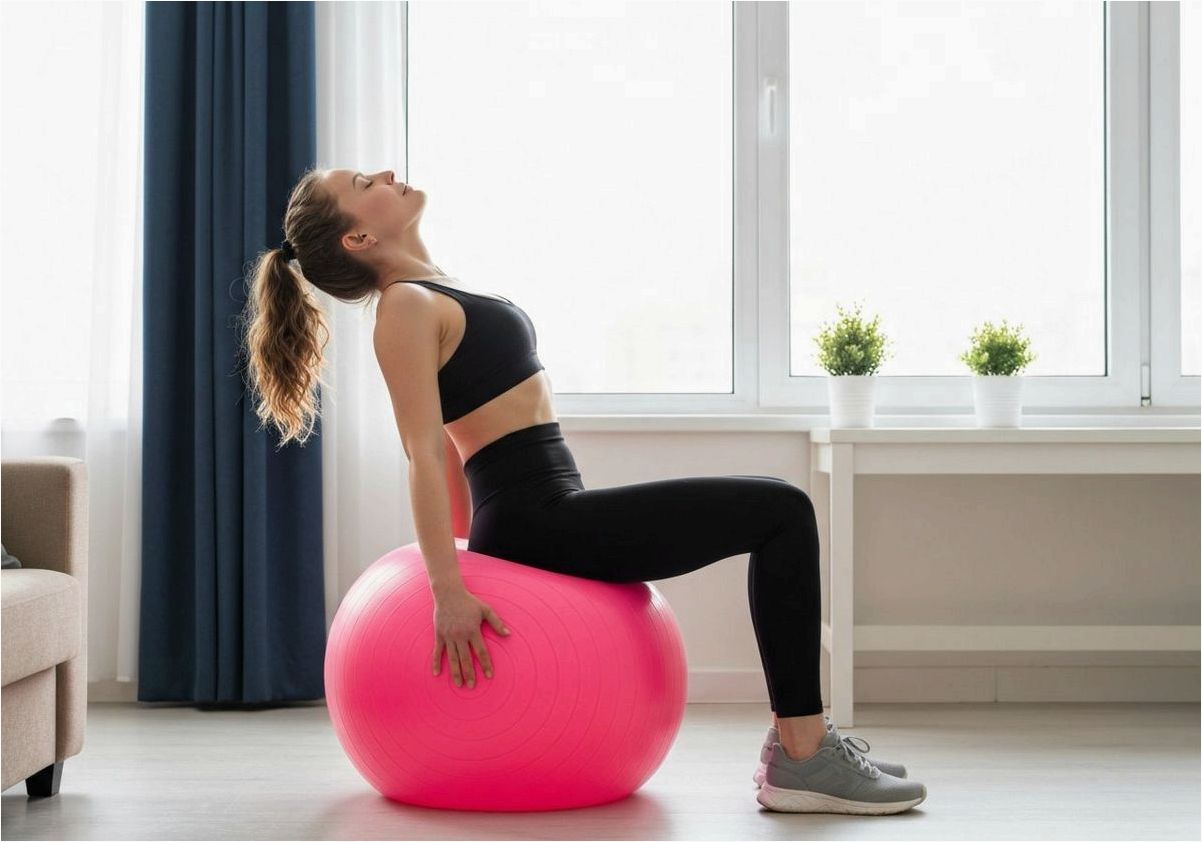
The reason is that the fitball’s surface is unstable, and you can only sit comfortably on it if your back is straight and not arched. In this position, the stabilizer muscles are actively engaged, supporting the spine like a corset, significantly reducing its load. In contrast, when sitting on a regular chair with a hard support, we often relax, lean our body forward, and round our shoulders, which over time leads to the development of a slouched posture.
Article Contents:
“If you find it difficult to spend the entire workday sitting on a fitball and you feel discomfort, try alternating it with a regular chair,” recommends Irina FILATOVA, master trainer at the VITASPORT wellness club. “Start with 15 minutes on the ball, then sit in a chair for an hour. Throughout the day, alternate these options, gradually increasing your time with the fitball and remembering to take breaks.”
Your body will thank you
– Spine and muscles. When you lean against the back of a standard chair, your spine takes on a rounded shape, placing more strain on the lumbar region, which can trigger a herniated disc. Using a fitball helps activate the muscles of the hamstrings, abdomen, buttocks, and other groups, which helps maintain proper posture and support a healthy spine.
– Internal organs. Sitting for long periods on a hard chair leads to blood stagnation in the lumbar region and increased pressure on internal organs such as the liver, kidneys, stomach, intestines, etc. This creates compression, which negatively impacts digestion. Using a fitball, thanks to muscle activation, improves venous outflow, which promotes normal gastrointestinal function.
Additional benefits of using a fitball
– Improved balance and coordination. The constant need to balance on a fitball forces the small muscles responsible for body stability to be engaged. Over time, this improves coordination and reduces the risk of injury during everyday activities.
– Increased concentration and performance. Mild muscle tension and the need to maintain balance stimulate blood circulation and oxygen supply to the brain, which promotes better concentration and reduces fatigue during work.
– Additional calorie burn. Compared to regular sitting in a chair, sitting on a fitball increases energy expenditure due to constant muscle activity, which helps maintain physical fitness, especially if you have a sedentary lifestyle.
Prolonged_sitting_is_harmful,_even_on_a_fitball!
Therefore, it is important to take a break every 60 minutes: stand up and walk for a few minutes—5-7 minutes is enough. Even better, do a light warm-up, stretching your back, lower back, and leg muscles. This is essential to prevent congestion in the pelvic area and legs, which increases the strain on the venous system.
Warm-up at Work
Just three simple stretching exercises will relieve muscle tension and improve posture, even if you spend all day in the office. Perform this set 3-4 times a day.
1. Stand up straight, clasp your hands together, and raise them upward. Reach toward the ceiling, hold at the top for 2-3 seconds, then lower your arms. Do 5-7 repetitions.
2. Sitting on a chair or exercise ball, round your back and extend your arms forward from a relaxed position. Hold the stretch for 30-60 seconds, then return to the starting position. Repeat 3-4 times.
3. Stand up straight, grab the back of a chair with your left hand, and grab your right heel with your right hand, pulling it toward your buttock, keeping your lower back straight. Hold this position for 30 seconds, then switch arms. Repeat exercise 3-4 times.
4. Periodically perform crunches while sitting on a fitball: sit on the ball, keep your back straight, arms on your hips or extended forward, and smoothly twist your torso to one side, then the other. Do 10 repetitions on each side. This will improve spinal mobility and strengthen your core muscles.
5. To improve blood circulation, you can do simple leg exercises: while sitting on a fitball or chair, lift your heels off the floor, pushing up on your toes, and vice versa. Do 15-20 repetitions to reduce fatigue and prevent swelling.