Two Basic Abdominal Exercises Worth Mastering
Among the many core strengthening techniques, two key exercises stand out: crunches, which effectively target the superficial abdominal muscles—the rectus abdominis and obliques—and planks, which activate the deep, corset-like abdominal muscles—the transverse abdominis Article Contents: exercises for a Comprehensive Abdominal Workout
Training the Abs During Strength Training
- Tips for Maximizing the Effectiveness of Abdominal Workouts
- Ab Training Mistakes and How to Avoid Them
- “Crunches target the superficial abdominal muscles, whose fibers are vertically oriented, ensuring coordinated work during the exercise,” explains Martin Eriksson-Krommert, a specialist at Rebro University in Sweden. Interesting fact: a study by Swedish scientists has shown that maximum load on the rectus abdominis is achieved by keeping your arms behind your head when performing crunches, rather than on your chest or extended forward. Furthermore, increasing the speed of the exercise can double the activation of the rectus abdominis, as confirmed by other scientific data. Include both classic crunches and diagonal variations in your workouts, which engage the obliques
- As for the plank, “some dynamic variations, such as the side plank with a twist or the spider plank, require high core stabilization and actively engage the transverse abdominis,” notes Michelle Olson, a professor at Huntingdon College who has been researching the effectiveness of abdominal exercises for over 20 years
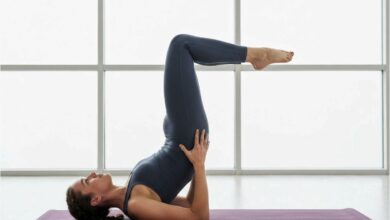
exercises for a comprehensive abdominal workout Spider plank. Get into a plank position, supporting yourself on your hands and toes. Keeping your hips level, bend your left knee and draw it toward your left triceps. Return to the starting position and repeat the same movement with your right leg. One cycle of left and right reps counts as 1 rep. Perform 2 sets of 10-12 reps double crunches. Lie on your back with your arms at your sides. Raise your head and shoulders off the floor, place your hands behind your head, and interlace your fingers behind your head. Simultaneously, raise your legs to about a 45-degree angle. Without lowering your torso, pull your knees toward your chest, clasping your hands around them. Then straighten your legs and raise your arms overhead, returning to the starting position. This counts as one repetition. Do 2 sets of 10-12 repetitions.
Side plank twists. Get into a side plank, resting on your left palm and feet, with your right leg in front of your left. Bend your right elbow and place your hand behind your head. Twist your torso, trying to lower your right elbow under your left. Return to the starting position. One repetition is a full cycle of twisting and returning. Do 12 repetitions, then switch sides Working the Abs During Strength Training the abdominal muscles can be worked not only in isolation but also indirectly. “Increasing the load or weight when performing full-body compound exercises naturally engages the abdominal muscles,” explains Olson. “Classic strengthening exercises are great for engaging the abs if you maintain proper form or slightly adjust the movement.”
Tips for Maximizing the Effectiveness of Abdominal Workouts
Use heavier dumbbells. Increasing the working weight when performing weighted squats and biceps curls promotes increased abdominal activation. “The heavier the weight, the more the abs are engaged in supporting the body,” says Olson.
Incorporate sprint intervals. Interval sprints activate the abdominal muscles more intensely during strength training sessions, and cardio with variable loads helps burn fat more effectively than exercises at a constant speed.
Tips for Maximizing the Effectiveness of Abdominal Workouts
Ab Training Mistakes and How to Avoid Them
Don’t forget to stretch. After your workout, it’s important to stretch your core muscles to improve flexibility, reduce the risk of injury, and promote better recovery Regularity is more important than intensity. To achieve noticeable results, exercise consistently 3-4 times a week, gradually increasing the load and number of repetitions supplement exercise with a balanced diet. Percentage reduction
subcutaneous fat
important for making your abdominal muscles more visible. Controlling calories, eating protein and eating right will help make your workout more effective.
Vary your training load. Add different abdominal exercises, including static holds, dynamic movements and work with additional weight – this way the muscles will develop harmoniously and will not get used to the monotonous load Abdominal training mistakes and how to avoid them do not lift your neck with your hands. This creates unnecessary tension in the neck muscles and provokes injuries. Place your palms at your temples or cross them over your chest, and lift with your chest, not your head Do not arch your lower back in the lumbar region. Make sure your back remains flat and pressed to the floor. To do this, you can slightly pull the navel towards the spine, which activates core muscles
“Crunches target the superficial abdominal muscles, whose fibers are vertically oriented, ensuring coordinated work during the exercise,” explains Martin Eriksson-Krommert, a specialist at Rebro University in Sweden. Interesting fact: a study by Swedish scientists has shown that maximum load on the rectus abdominis is achieved by keeping your arms behind your head when performing crunches, rather than on your chest or extended forward. Furthermore, increasing the speed of the exercise can double the activation of the rectus abdominis, as confirmed by other scientific data. Include both classic crunches and diagonal variations in your workouts, which engage the obliques.
Avoid sudden and jerky movements. Perform the exercises smoothly, with control of amplitude and speed. Sudden jolts reduce efficiency and increase the risk of injury Don’t hold your breath. Inhale as you relax, exhale as you tense your abdominal muscles. This improves oxygen supply and maintains proper muscle tone don’t overdo the number of repetitions. Quality is always more important than quantity. It is better to perform fewer repetitions with correct technique than many with errors.
Two basic exercises for training the abdominal muscles that are worth mastering
As for the plank, “some dynamic variations, such as the side plank with a twist or the spider plank, require high core stabilization and actively engage the transverse abdominis,” notes Michelle Olson, a professor at Huntingdon College who has been researching the effectiveness of abdominal exercises for over 20 years.