Features of cross-country races
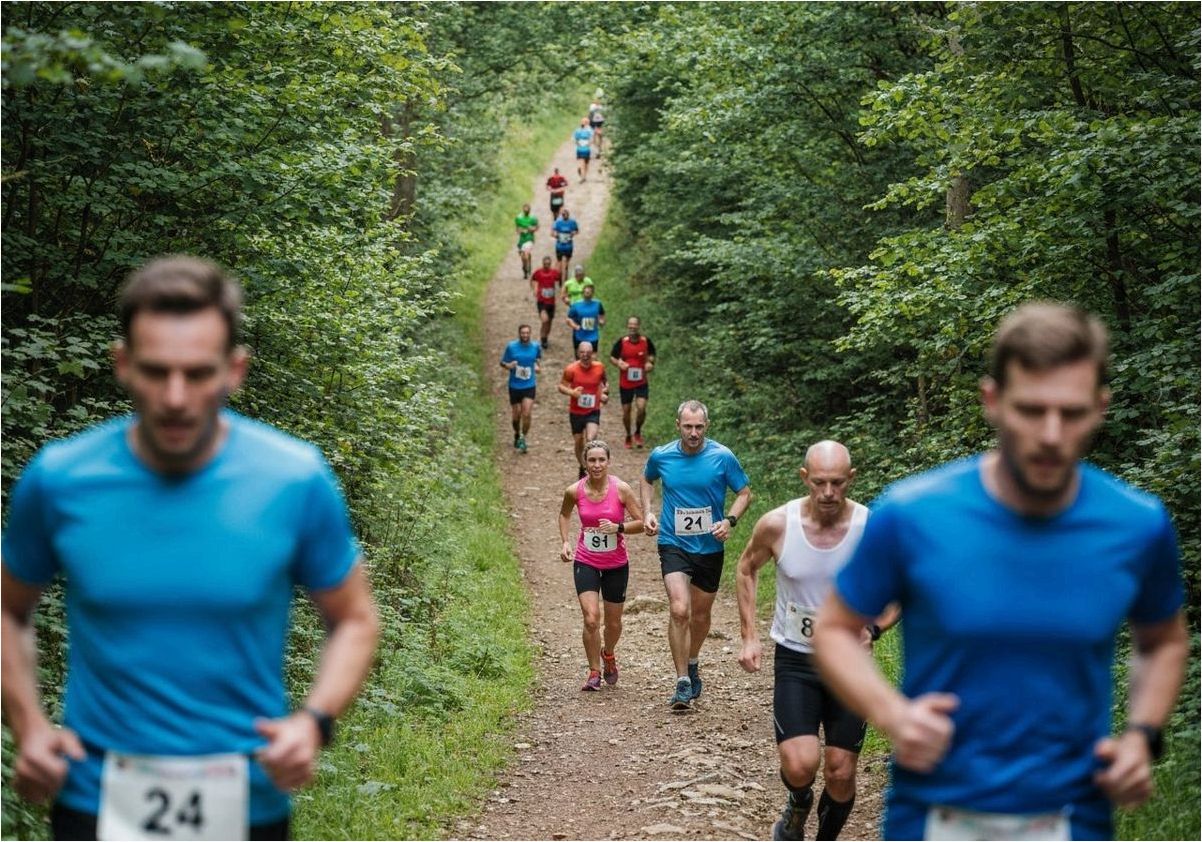
Increase the effectiveness of your training by abandoning your usual routes. If you’re looking to increase your muscle load, increase your calorie burn, and avoid developmental plateaus, choose parks and nature trails for your runs.
Contents of the article:
“running on flat asphalt is a great base for beginners, but mastering difficult, rugged routes helps you become a true master,” says David ROCHE, a professional athlete and coach. On paths in a park or forest you will find jumping over snags and fallen trees, climbing steep slopes, sharp turns and moving along slopes. “This variety of exercise strengthens the body, improves coordination and technique—you learn to change direction quickly without losing momentum,” explains Roche. These small tests help build muscle mass
“running on uneven surfaces significantly activates the work of the hips compared to smooth asphalt,” shares Alexandra VOLOSHYNA, a researcher at the University of Michigan. — Even minimal changes in height underfoot trigger additional muscle processes and speed up fat burning : Just a 3 cm difference will increase caloric expenditure by 5%. In addition, cross-country training improves performance on the treadmill: the work of all physiological systems responsible for running is activated, which allows you to increase the lactate threshold and maximum oxygen consumption (VO2 max),” adds Roche.
6 Important Tips for Off-Road Running
Are you ready to test yourself on difficult terrain? Follow the advice of experts to ensure your training is successful.
1. Plan your route carefully
Most likely, there will be no water points or snack stations on remote routes. “Prepare ahead of time,” recommends Chrissy MOEL, a coach at Revolution Running. “Bring everything you need with you—a snack (such as a protein bar) and warm clothing if unexpected weather changes are possible in the late afternoon.”
It’s also a good idea to check the map and weather forecast in advance, and if possible, consult with local runners or guides. Don’t forget to inform your family or friends about the exact route and expected return time.
2. Forget about racing against time
On rough terrain, the speed is usually lower than usual, since it is necessary to constantly adapt to the difficult terrain: uneven surfaces, roots, stones, sand, notes Moel. “Plus, beautiful views often make you pause to enjoy nature. Don’t try to maintain a high pace – such runs strengthen your overall endurance.
It is important to focus on your own feelings and not overload the body in order to avoid injury. Use these workouts to improve coordination and build stability.
3. Vary your workout types
“Choose your trail based on your athletic goals,” says Megan Hicks, co-author of Where the Road Ends: A Guide to Trail Running. “A route with obstacles develops flexibility, and all the changes—ascents and descents—help build strength. To develop speed, it is better to choose smooth and predictable paths where there is no need to overcome natural barriers, since they do not contribute to an increase in heart rate.”
Don’t forget to include recovery runs on light ground or grass in your training to reduce the stress on your joints and muscles.
4. Climb the mountain correctly
When climbing, be sure to lean forward from your hips toward the side of the slope to move your center of gravity forward, Hicks advises. “Use active arm movements back and forth—this helps you move faster and more efficiently.”
To make lifting easier, you can also use the “small steps” step. and control your breathing – this will allow you to maintain a uniform rhythm and reduce fatigue.
5. Be careful on the slopes
& ldquo; On steep slopes it is easy to& ldquo; carry& rdquo; running down, losing control,” Hicks warns. “But this increases the load on the bones, because the muscles do not have time to soften the impact when landing.” Adjust your pace. “Avoid landing on your heel,” explains Leonid SHVETSOV, coach and founder of the School of Conscious Running. – On a gentle slope, do not lean back anywhere – lean forward from the ankle and maintain the rhythm, slightly increasing the length of the step. On a steep descent, shorten your stride to place your foot closer to your center of gravity, reducing the impact.
Keep your body relaxed and focus on landing softly under your center of gravity. Use your hands for balance – they will help you avoid losing your balance on an uneven surface.
6. Don’t forget to recover
“Running on trails causes much more microtrauma in the muscles than training on a flat surface,” warns Roche. — Such injuries contribute to the growth of muscle strength, but require high-quality recovery. Spend 10 minutes massaging with a foam roller, focusing on your quads, glutes, calves, and thigh muscles “this will speed up regeneration.”
In addition to massage, do not neglect stretching after jogging, proper nutrition and good sleep. Using compression clothing and contrast showers also helps reduce muscle tension and speed up recovery.
The importance of proper nutrition and hydration
Before a cross-country race, you need to increase your carbohydrate intake to 7-10 g per kilogram of body weight per day to replenish muscle glycogen stores. This will allow you to maintain a high level of energy throughout the entire distance. During the run, it is recommended to replenish fluid reserves taking into account the loss of 0. 5–1 liters per hour, focusing on the likelihood of dehydration during intense exercise and hot weather.
Drink small amounts of water every 15–20 minutes, supplemented with isotonic drinks containing 500–700 mg sodium per liter to maintain electrolyte balance. Restore after the race water balance by drinking 1. 5 liters of fluid for every kilogram of weight lost. Include 1. 2–1. 7 g of protein per kilogram of body weight in your diet to speed up muscle recovery and reduce inflammation.
Avoid heavy, high-fat, high-fiber meals 2-3 hours before your race to minimize stress on your digestive system and reduce the risk of discomfort. It is recommended to make your morning meal easily digestible and rich in carbohydrates, for example, oatmeal with a banana and a small amount of nuts.