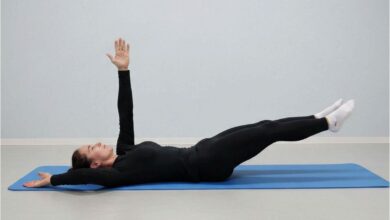
Exercise of the Day: Hyperextension
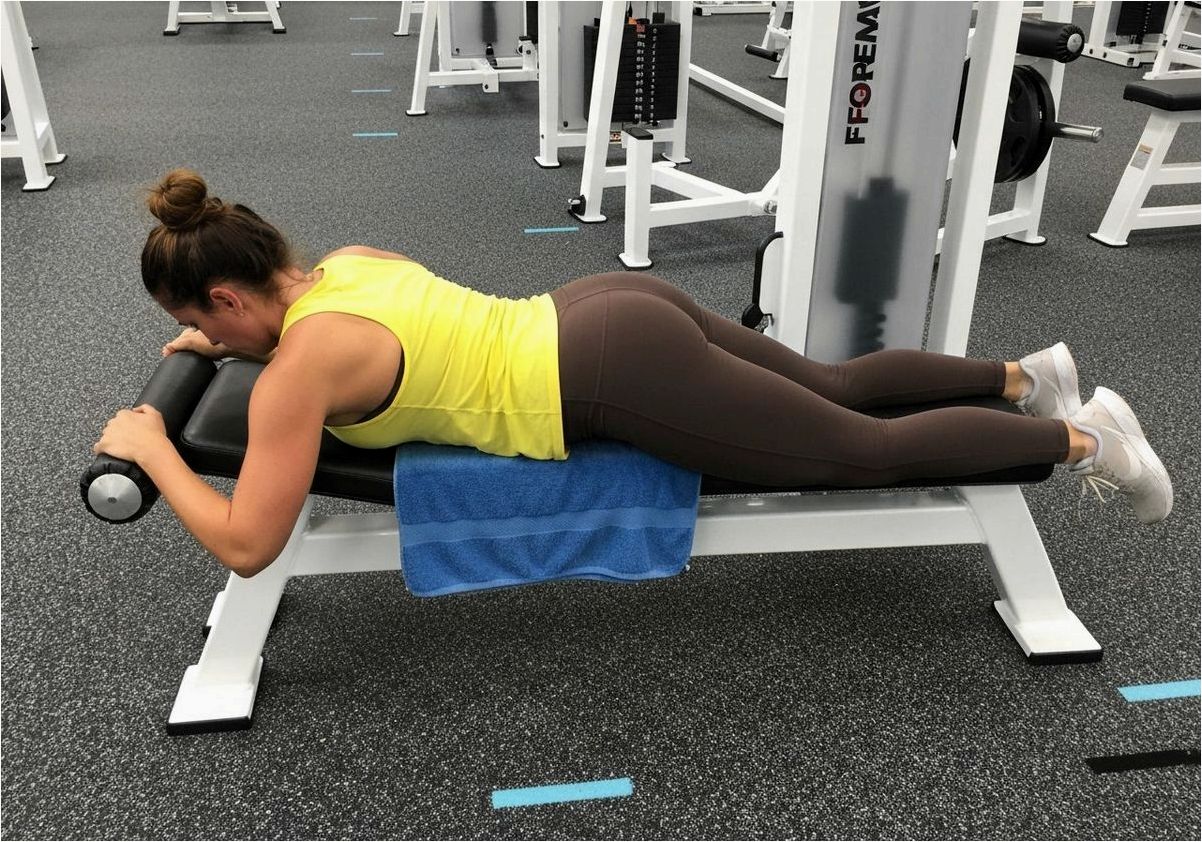
This exercise helps strengthen the muscles that support the spine, improves coordination, and reduces the risk of injury during physical training.
Article Contents:
Recommendations for performing the exercise:
Perform 1 to 3 sets of 8–15 repetitions, 2–3 times a week. Once you can easily do 15 reps, make the exercise more challenging by placing your hands behind your head. For an even greater challenge, raise your straight arms above your head.
Target muscle: spinal extensors
Step-by-step guide
Position yourself on the back extension machine at a 45-degree angle. Place your feet shoulder-width apart, legs straight but knees relaxed. Holding onto the handles, press your thighs as firmly as possible against the pad.
Engage your core and lean forward, bending at the hips while keeping your back flat. Cross your arms over your chest and place your palms on your shoulders. Without relaxing your core, slowly lift your torso using your back muscles until your body forms a straight line.
Bring your shoulder blades together and gently lower them, opening up your chest. Hold this position for a few seconds, then carefully lower your body back down.
Expert tip: At the top of the exercise, look straight ahead—this will help maintain the spine’s natural curve.
Most Common Mistakes
Do not perform the exercise too quickly. Only the work of the back muscles without using momentum will ensure effective results and protect the intervertebral discs from displacement. The back should remain flat at the top position to avoid excessive strain on the spine. Do not change the position of your hands until your muscles have strengthened, so as not to compromise proper form
Additional recommendations
Before starting the exercise, be sure to warm up with dynamic stretching of the back and hip muscles to prepare your body for the workout and reduce the risk of injury. If you experience pain in your lower back while performing the hyperextension, reduce the range of motion or consult a doctor or physical therapist.
For beginners, you can perform the exercise without additional weight to master the correct technique and strengthen the core muscles as you progress, you may use weights or exercise balls to vary the intensity of the workout.
In addition, combine hyperextension with stretching exercises for the glutes and hamstrings to avoid excessive strain on the lower back and improve overall flexibility.
Pay attention to your breathing: inhale as you lower your torso, exhale as you lift it back up. Steady breathing helps you control your movements better and reduces fatigue.
Variations and modifications of the hyperextension
Add weight to increase the load on the lower back muscles by holding a dumbbell or weight plate against your chest. This modification helps build core strength and stability. To focus on the glutes and hamstrings, perform the hyperextension by extending your torso until it is parallel to the floor and then lifting your pelvis.
For a greater range of motion, try performing hyperextensions on a Roman chair, raising your torso above the horizontal plane. This technique promotes deep stretching and places additional stress on the core muscles.
Use a torso rotation during the lift to engage the oblique abdominal muscles and improve the workout of the lateral back muscles. Perform the movements smoothly and under control, avoiding jerks and sudden movements.
Kui teil on liikuvuspiirangud, muutke treeningseadme kaldenurka, mis vähendab koormust ja võimaldab järk-järgult liikumisega kohaneda. Algajatele sobib hüperestensioon, kus käed toetuvad rinnale või on ette sirutatud, et tasakaalu hoidmine oleks lihtsam.
Variant, kus jalad on fikseeritud ja ülakeha vaba, koormab rohkem alaselga, samas kui vastupidine variant – fikseeritud ülakeha ja liikuvate jalgadega – kaasab rohkem tuharalihaseid. Vahetage neid variante, et treening oleks mitmekülgne.