Bulgarian Split Squats: Technique and Advanced Variations
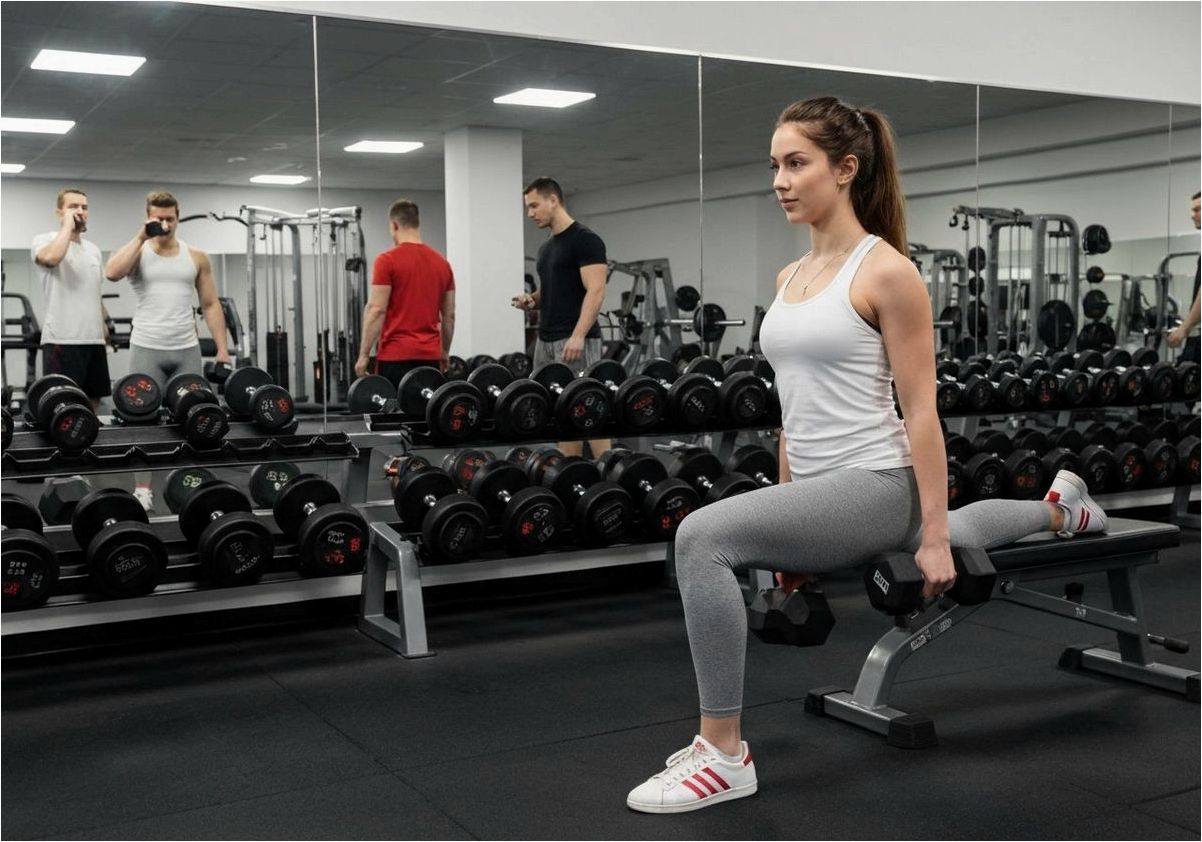
Whether you’re looking to increase your overall physical workload or focus on developing your glutes , Bulgarian split squats will help you effectively achieve your goals in the shortest possible time.
Article Contents:
the Bulgarian lunge is a variation of the classic lunge that combines a squat with a step forward. To perform it in the gym, you will need a bench and dumbbells. It is very important to use proper form to avoid injuries to the knees and back. Correct execution will help you improve strength, flexibility, and stability, while the various modifications of this exercise, created by leading trainers for different fitness levels, will help add variety to your workout routine. New approaches to classic movements promote maximum muscle activation, endurance, and strength.
Proper Technique for the Bulgarian Lunge
The classic Bulgarian lunge primarily targets the muscles on the front of the thigh (quadriceps), while also engaging the glutes , the core muscles and the calves. To effectively work the quadriceps, keep your torso as upright as possible during the lunge. There are several ways to assume the starting position; we recommend doing it this way:
- Sit on a bench, extend one leg forward, placing your heel on the floor. Stand up so that your front foot is directly above your heel.
- Lift your other leg and place the toe (or the laces of your sneaker) on the bench behind you.
- Lower yourself smoothly, keeping your front shin and torso perpendicular to the floor. Focus on shifting about 90% of your weight onto your front leg.
- Push off with your front leg to return to the starting position.
To achieve maximum results, follow these recommendations:
- Movement control: Perform the lunge slowly and in a controlled manner, avoiding sudden jerks. This will engage the muscles more effectively and reduce the risk of injury.
- Knee position: Make sure the knee of your front leg does not extend beyond the line of your toes. This will help avoid excessive strain on the joints.
- Lunge depth: Lower yourself until the thigh of your front leg is parallel to the floor, keeping your back leg relaxed and supported only by the ball of your foot.
- Breathing: Inhale as you lower yourself and exhale as you rise. Proper breathing helps maintain core stability and improves endurance.
- Variations to increase difficulty: To increase the intensity, you can use additional weights—dumbbells or a barbell—and adjust the height of the bench to adapt the exercise to your fitness level.
Regularly performing Bulgarian lunges helps build leg strength, improve balance and coordination, and correct muscle imbalances between the legs.
Four Variations of the Bulgarian Lunge
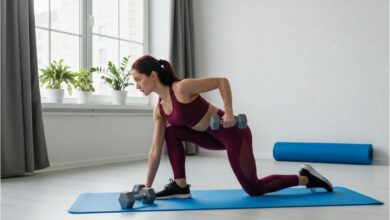
Increased Load: Bulgarian Lunge with Additional Weight
Adding external weight (dumbbells or a barbell) increases the load on the muscles, allowing you to reach muscle fatigue and make progress faster.
However, you shouldn’t use excessively heavy weights and limit yourself to a small number of repetitions (2–5), as with barbell squats. Since the exercise requires balance and is performed on one leg, it’s best to do 10 to 15 repetitions. Choose a weight so that at the end of the set, you have no more than 2 repetitions left before failure while maintaining proper form.
- Hold the dumbbells in your hands.
- Sit on a bench, extend one leg forward, and place your heel on the floor. Stand up so that your front leg is directly above your heel.
- Lift your other leg, placing the laces of your sneaker on the bench. Hold the dumbbells at your sides or hold one dumbbell on the side of your supporting leg.
- Rotate the hip of your supporting leg slightly to the side—this will protect your knee joint from excessive strain.
- Lower yourself down, keeping your front shin and torso vertical. Shift 90% of your weight onto your front leg.
- Push off with your front leg to return to the starting position.
Easier version: half-range Bulgarian lunges using your own body weight
Reducing the range of motion to 90 degrees at the knee helps make the exercise easier while maintaining its benefits. This approach is ideal for beginners or those who have difficulty with deep squats. Performing the exercise without additional weight reduces the load on the quadriceps while still stimulating the muscles.
- Stand so that your front foot is positioned directly over your heel.
- Lift your other leg and place the laces of your sneaker on the bench.
- Lower yourself down until the thigh of your front leg is parallel to the floor. Shift 90% of your weight onto your front leg.
- Push off with your front leg to return to the starting position.
Bulgarian lunges for balance issues
If balancing on one leg is difficult, you can replace the Bulgarian lunge with a classic lunge while keeping the back leg on the floor, or lower the height of the support for the back leg (for example, use a step or a lower platform instead of a standard bench about 50 cm high). In this case, you can shift some of your weight to the back leg, which will increase stability. Aim for a weight distribution of approximately 70% on the front leg and 30% on the back leg. If this seems too difficult, start with a 60%/40% distribution, gradually increasing the load on the front leg as your confidence and strength grow.
- Stand up straight with your feet hip-width apart. Step back with one foot about 50–70 cm.
- Lower yourself down, keeping your spine straight, with most of the effort coming from your front leg.
- Push off with your front leg to return to the starting position.
Bulgarian lunges to increase gluteal muscle engagement
By making small adjustments to the standard Bulgarian lunge technique, you can shift the focus of the workout to your glutes. Instead of keeping your torso straight, lean forward slightly while bending your hip. This will shift your center of gravity and engage your glutes more actively, helping you push back up.
- Sit on a bench, extend your front leg with your heel on the floor, and position your body so that your supporting leg is directly above your heel.
- Lift your back leg, resting the laces of your sneaker on the bench.
- Slightly bend your hip and lean forward over your supporting leg so that your chest is above your knee.
- Lower yourself down, shifting 90% of your body weight onto your front leg.
- Push off with your supporting leg to return to the starting position.