Building Chest Muscles: An Effective Workout
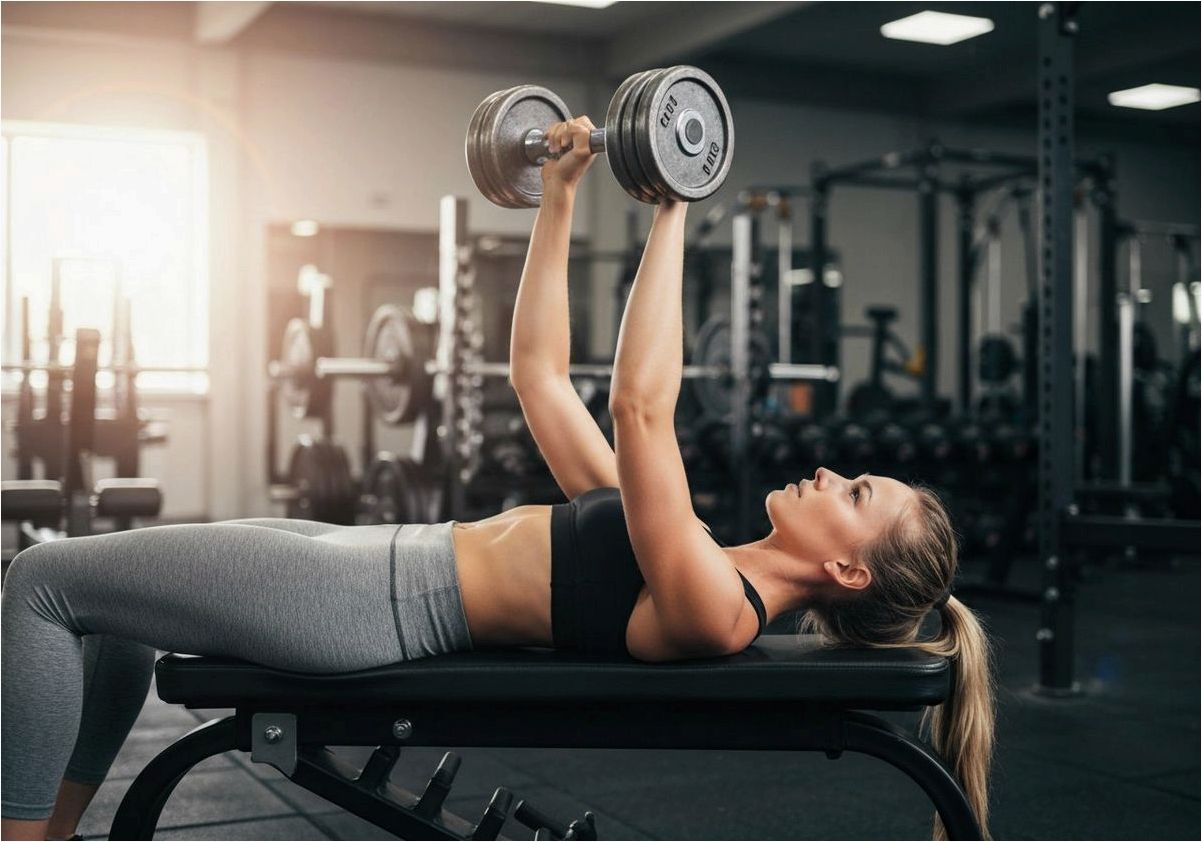
To effectively build muscle mass, it is generally recommended to use heavy weights with a low number of repetitions. However, for the chest muscles, it is better to use lighter weights and increase the number of repetitions to avoid shoulder injuries.
Article Contents:
Features of strength exercises for women’s chest
The first exercise in this program is the incline bench press using a Smith machine—it allows you to work with fairly heavy weights, since the incline reduces the load on the shoulder joints. The second exercise—the “butterfly” with a cable pull in the lying position—is performed with lighter weights, which ensures a thorough workout of the chest muscles without negatively impacting the shoulders.
- Workout Structure. Perform the exercises 2–3 times a week, making sure to include at least one rest day between workouts. Beginners are advised to start with a single exercise, gradually adding the others as their muscles strengthen. To maintain balance and proper posture , it is important to simultaneously strengthen the back muscles : the trapezius, rhomboids, and latissimus dorsi.
- Anatomy of the chest muscles the pectoralis major is fan-shaped and consists of the clavicular and sternocostal parts, which attach to the humerus. Its main function is to raise, lower, and rotate the arm inward. The serratus anterior and pectoralis minor muscles also stabilize the shoulder blades when the arms are brought together and help lift the ribs during inhalation.
- The Importance of Proper Breathing. Breathing plays a key role during chest exercises. It is recommended to inhale in the starting position and exhale during maximum effort (for example, when bending the arms or bringing the shoulder blades together). This improves core stability and promotes better blood flow to the muscles.
- Technique and control. For maximum effectiveness, it is important to control your movements, avoiding jerky motions and rushing. Slow, controlled repetitions reduce the risk of injury and promote deep engagement of the muscle fibers.
Incline bench press with a Smith machine
This exercise targets the chest muscles, triceps, and the front and middle deltoids deltoid muscles
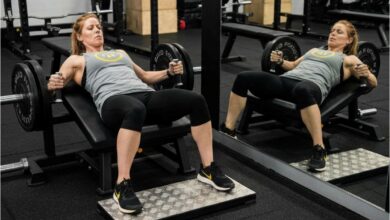
position the bench under the Smith machine bar so that the angle between the backrest and the floor is about 30°. Lie down on it with your knees bent and your ankles crossed. Grasp the bar with a wide, straight grip, unlock it from the safety pins, and fully extend your arms—the bar should be positioned above your chest. Slowly lower the bar over 2 seconds, spreading your elbows out to the sides at shoulder level, then slowly raise it back up over 2 seconds. Repeat for the desired number of repetitions.
Tip: To avoid excessive strain on your wrists and shoulders, keep your wrists in a neutral position and try not to spread your elbows too wide—an angle of about 75–90 degrees is optimal for comfort and safety.
EXPERT RECOMMENDATION
Since women’s arms are longer relative to their torso, it is more difficult for them to hold their weight on fully extended arms. This increases the risk of shoulder joint injury when the load is too heavy. In addition, the popular “butterfly” exercise on a flat bench is not as safe for women—the incline bench press and the cable “butterfly” are better suited for them.
Lying cable butterfly exercise
The main load is on the chest muscles.
Attach the handles to the lower cables of the cable machine. Lie on the floor between the posts with your knees bent and your feet parallel. Engage your core and open your chest. Spread your arms out to the sides, slightly bend your elbows, and grasp the handles. Keeping your elbows bent, bring your arms together in front of your chest, using the strength of your chest muscles. Slowly return to the starting position, controlling your form
important: Make sure your shoulder blades remain retracted and pressed against the surface; this will help maximize the work of the chest muscles and prevent excessive strain on the shoulder joints.
One-arm standing butterfly
This exercise targets the chest muscles and the front portions of the deltoids.
Attach the weight cuff to the upper cable of the cable machine. Stand with your left side facing the machine, keeping your feet shoulder-width apart. Slip the weight cuff onto your left arm and place your right hand on your waist. Engage your core. Raise your left arm out to the side to shoulder height, bending your elbow at a 90° angle. Slowly bring your elbow toward the center of your body using your chest muscles, then smoothly return to the starting position.
Recommended approach: Perform 3–4 sets of 12–15 repetitions on each side, focusing on smooth movements and proper form. This will help develop symmetry and strength in your chest muscles.
Additional tips for an effective chest workout
- Warm-up and stretching. Before your main workout, be sure to warm up with light cardio and dynamic stretching of the chest and shoulder muscles After your workout static stretching is beneficial, as it aids recovery and reduces muscle tension.
- Progression of loads. Gradually increase the weights and number of repetitions so that your muscles constantly adapt and grow. But always listen to your body and don’t forget about proper form.
- Recovery. Quality sleep and proper nutrition are essential components of effective muscle growth. Ensure you get enough protein, vitamins, and minerals for full recovery after workouts
Proper breathing and exercise technique
Control your range of motion: avoid sudden jerks and excessive extension of the elbows. Maintain a slight bend in your elbows to avoid injuring your joints and to distribute the load evenly.
Perform the movement slowly and deliberately, focusing specifically on contracting your chest muscles rather than relying on momentum or engaging other muscles. This will improve the quality of your workout and enhance muscle growth.
Use full contraction and muscle stretch , but do not go to the extreme positions with a “stuck” feeling—this prevents overexertion and increases resistance to injury.
Pay attention to your body position: the upper body should be stabilized, with the shoulder blades pulled back and down to activate the chest muscles and protect the shoulder joints.