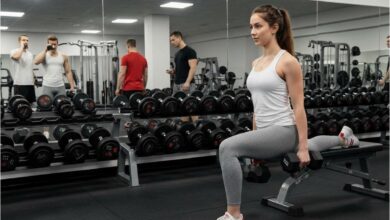
How to Use Time Under Tension for Effective Muscle Growth
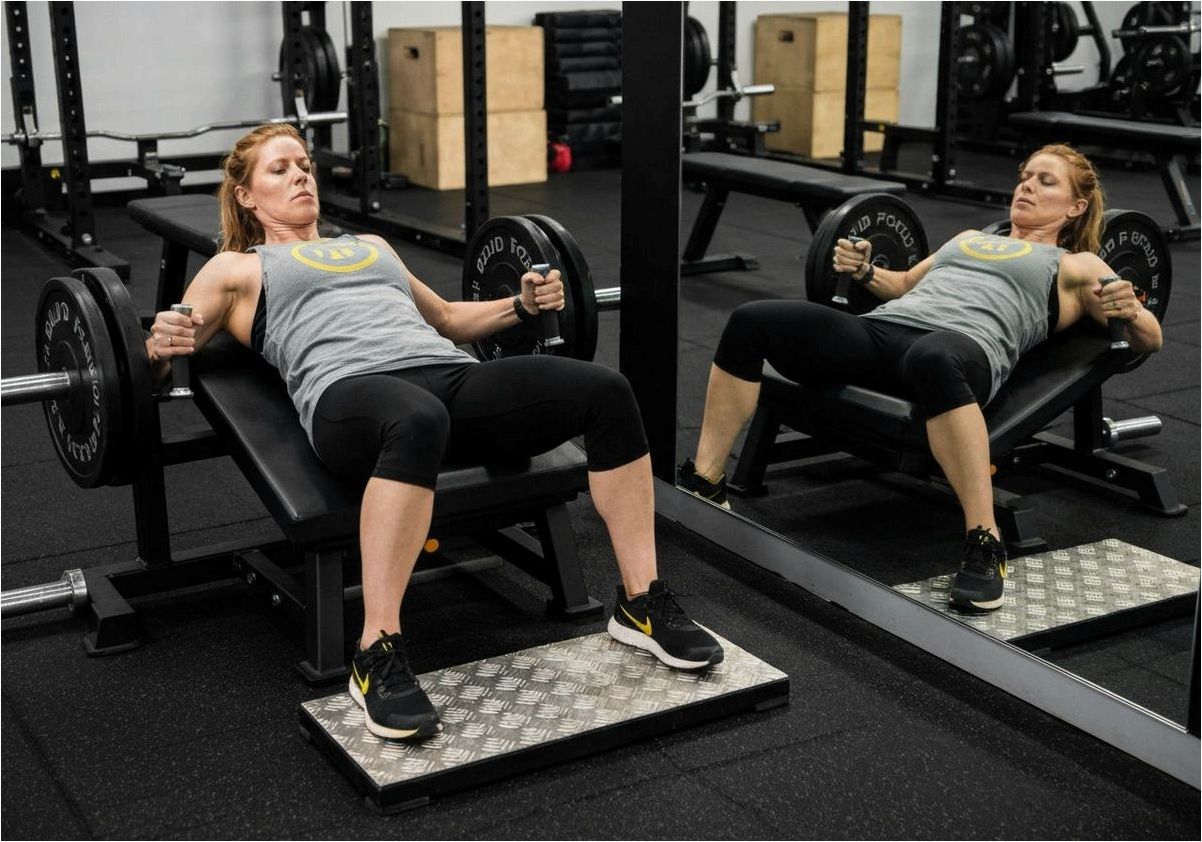
Are you lifting heavier dumbbells and kettlebells, giving it your all, but still not seeing the progress you want? In fact, there’s an alternative way to increase muscle strength and size without constantly increasing your working weight!
Article Contents:
extending the period during which muscles are under tension helps improve training results without resorting to additional loads. How does this work? Fitness professionals explain how to effectively utilize the time of maximum muscle tension in the training process.
What is meant by “time under tension”?
“Time under tension is the duration during which muscles actively contract to overcome external resistance,” explains Tessia De Mattos, a PhD in physical therapy and strength training specialist from New York. The slower the descent into a squat and the subsequent lifting movement are performed, the longer the muscles remain in a state of work. “Overall, the muscles work longer than they would at a standard exercise speed,” adds De Mattos. This can be increased by slowing down either the concentric phase (when muscle fibers contract) or the eccentric phase (when muscles lengthen). Additionally, you can hold a static tension—an isometric position where the muscle remains stationary at the peak of effort.
Benefits of increasing time under tension
Extending the tension period during workouts is a simple yet powerful method for increasing strength and muscle mass. Here are the key benefits of this technique:
- Increased muscle strength and hypertrophy. By reducing the number of repetitions while simultaneously increasing the time under tension, you can achieve greater muscle mass gains. A 2012 study found that performing leg extensions slowly accelerates muscle protein synthesis compared to a traditional pace. According to De Mattos, during synthesis, muscles recover thanks to amino acids, which promotes fiber growth. Additionally, a 2016 UC Davis Health study showed that a slowed-down eccentric phase enhances muscle activation and increases lactate levels—a marker of fatigue—which ultimately promotes hypertrophy.
- Improving exercise technique. “Slow movements help you master proper form more carefully, which is especially beneficial for beginners,” notes De Mattos. Regular gym-goers will also benefit from this approach: when performing squats , for example, you’ll more easily notice technical flaws, such as your knees extending past your toes—mistakes that can easily go unnoticed at a fast pace. This allows you to correct flaws in a timely manner and reduce the risk of injury.
- Strengthening tendons. Performing the eccentric phase slowly is beneficial for tendon health. “Scientific evidence confirms that tendons, which connect muscles to bones, respond very well to slow eccentric loading,” says De Mattos. Such exercises with slow lowering strengthen the structure of the ligaments and alleviate symptoms of chronic tendon conditions.
- Increased muscle endurance. Extending the time under tension helps develop not only strength but also muscle endurance. Maintaining the load for an extended period forces the muscles to work longer without rest, which improves their ability to resist fatigue during daily activities and sports.
- Improved neuromuscular connection. Slow, controlled movements strengthen the connection between the brain and the muscles, which helps to more precisely activate the desired muscle groups this is especially important for developing coordination and effectively engaging muscles during various exercises
- reduced risk of injury and overexertion. Controlled, sustained exertion reduces the likelihood of sudden movements and poor biomechanics, thereby reducing the strain on joints and ligaments. This approach allows the body to gradually adapt to the workload and avoid injuries caused by excessive sprinting or poor technique.
Tips for Increasing Time Under Tension in Strength Exercises
Extending the time your muscles are under tension is very simple—just focus more on the pace at which you perform your repetitions. Here are some tips from an expert:
- Perform exercises using your own body weight or with additional resistance. Every strength exercise includes a concentric and an eccentric phase; lengthening either of these phases allows you to increase time under tension. You can slow down your squats, Romanian deadlifts and leg extensions to work the lower body, or slow down the pace of bench presses and incline presses for the upper body. You can also hold the position of maximum muscle contraction for a few seconds, for example, during the “Superman” exercise. You don’t have to use heavy weights to achieve that muscle “burn.”
- Count slowly to five. According to De Mattos’s recommendation, the optimal duration for a single repetition is about five seconds. If this pace feels easy, try increasing the hold time at the peak to six seconds. Scientific publications in Sports Medicine confirm that this specific range promotes maximum muscle strength gains.
- Remember to take recovery breaks. When working with longer sets, rest periods between sets become especially important. “To effectively build muscle mass, you need to give your muscles time to recover—at least one minute between sets,” emphasizes De Mattos.
Mistakes when increasing time under tension and how to avoid them
Increasing time under tension too abruptly leads to a decline in the quality of exercise technique pay attention to movement control and fluidity; otherwise, the risk of injury increases and training effectiveness decreases
use a progressive approach: add no more than 10–15% to your current time per workout. For example, if you hold the weight for 40 seconds, aim for 44–46 seconds in your next workout.
Monitor your fatigue. When fatigued, muscles lose stability, which reduces the precision of the load, especially during the eccentric phase. Be sure to take 60–90-second breaks between sets.
Do not increase time under tension by reducing range of motion. Full range of motion is important for evenly engaging the muscles and preventing imbalances.
Avoid prolonged periods of static tension without periods of relaxation. This leads to lactic acid buildup and rapid muscle fatigue. Incorporate dynamic phases to improve blood flow to the muscles.
Maintain a balance between time under tension and total load. If the weight used is too light in an attempt to increase time under tension, the effectiveness of hypertrophy decreases. Choose a weight that allows you to maintain proper form and increase time under tension.