The “Dead Bug” Exercise: Five Effective Variations
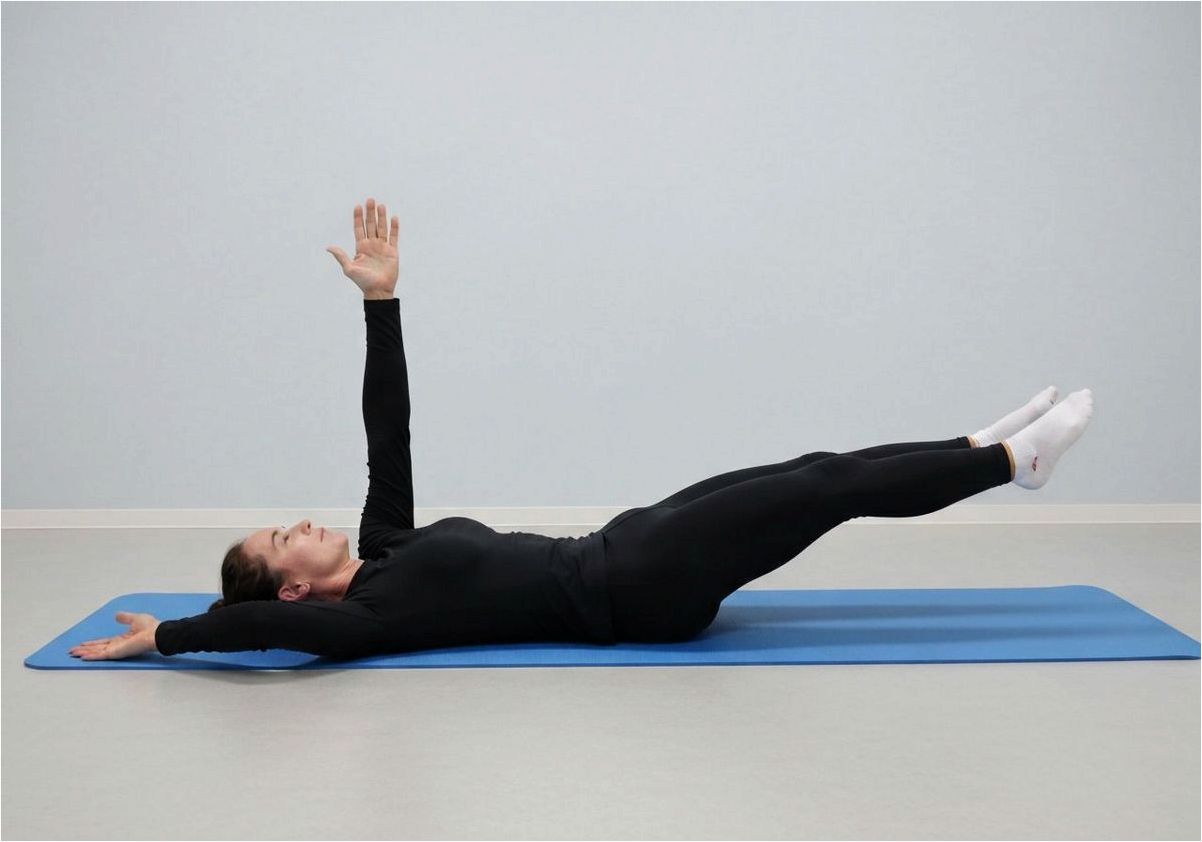
The “Dead Bug” is a little-known but highly beneficial exercise that helps prevent and relieve back pain, strengthen the core muscles, and improve body awareness. Strengthening your back muscles is crucial for any workout! After all, activities like running, squats, or walking require not only strong back muscles but also a powerful core. Weakened back muscles and abs can disrupt your coordination and balance during everyday movements, such as stepping over obstacles, reaching out with your arms, or twisting your torso while carrying objects.
Article Contents:
according to a study published in the *Strength and Conditioning Journal*, exercise is one of the most effective methods for preventing and managing lower back pain and strengthening the spine. The “Dead Bug” exercise, in particular, is renowned for its ability to improve the stability of the lumbopelvic segment, which includes the lower back and pelvic region. It is this area that often causes lower back pain and may also be associated with pelvic floor dysfunction, which is particularly relevant for women.
Five Variations of the “Dead Bug” Exercise
Classic “Dead Bug”
- Relax while lying on your back on a soft mat or exercise mat.
- Raise your arms straight up above your shoulders, and bend your knees so that they are positioned above your hips.
- Engage your core muscles as if you were bracing for a punch to the stomach, while pressing your lower back into the floor and tilting your pelvis slightly to eliminate the gap between your back and the floor.
- Slowly and carefully bring one arm back, trying to touch the floor with your thumb, while simultaneously lowering the opposite leg to the floor. You can perform this exercise with your knee bent or your leg straight to increase the intensity. It is important to keep your lower back pressed firmly against the floor and your ribs pulled down.
- Return to the starting position and repeat the movement, switching to the opposite side.
Coach’s Tip: This basic movement is ideal for warming up before strength training. Focus on maintaining a neutral spine, take a deep breath, expanding your sides as if filling your abdomen with air to create internal pressure and ensure spinal stability, and then begin the exercise.
Additional recommendations: To improve core control, we recommend performing the exercise in front of a mirror or with the help of a fitness trainer. Focus on smooth movements; avoid sudden jerks to prevent excessive strain on your lower back.
“Dead Bug” with arms held still
If you want to reduce the difficulty and work only your legs, you can perform a modification with your arms fixed. This variation is great for determining your individual range of motion. Start with your knees bent, then gradually try to straighten your legs. The point at which your lower back stops touching the floor should be your limit.
- Lie on your back with your knees bent and positioned above your hips so that your body forms an inverted “L” shape. Make sure your lower back stays pressed against the floor by engaging your core muscles. Place your hands on your stomach.
- Extend your legs one at a time, keeping your core engaged and your lower back flat. The closer your feet are to the floor, the more challenging the exercise becomes. Start with your knees bent, or to make it harder, straighten your legs without lifting your lower back off the floor.
Note: This variation is well-suited for rehabilitation after injuries or when the core muscles are weak. Regular practice will help improve body awareness and strengthen the stabilizing muscles without overloading the spine.
Advanced variation — “Two-Legged Dead Bug”
Once you’ve mastered the classic version, try this more challenging variation, which engages both legs simultaneously and thus increases the load on the core muscles. You can keep your arms above your head, or you can extend them behind your head alternately or simultaneously for an added challenge.
- Assume the starting position: lying on your back, arms extended straight above your shoulders, and knees positioned above your hips.
- Engage your core, keeping your lower back firmly pressed against the floor.
- Slowly extend both legs forward, trying to keep your lower back pressed against the floor. You can keep your legs bent at the knees or straighten them to increase the intensity. Make sure your ribs are drawn down and your back isn’t arching.
Helpful tip: Be especially careful when performing this exercise if you have lower back issues or herniated discs. In such cases, it is recommended that you consult a doctor or physical therapist beforehand.
“Dead Bug” March
The “Dead Bug” exercise helps reduce both acute and chronic lower back pain by activating the deep core muscles and promoting stabilization. If you experience back pain or have weak deep muscles, the classic version may be too difficult. In that case, try a simplified version with alternating leg lifts, which makes it easier to keep your core engaged and ensures your back stays firmly pressed against the floor.
- Lie on your back, bend your knees, and press your heels into the floor. Engage your core muscles by pressing your lower back into the surface, and place your hands on your abdomen.
- Lift one leg so that your knee is above your hip, then lift the other leg, keeping your body tense and your lower back pressed against the floor. Lower the first leg with your heel down, then do the same with the other.
- Repeat the movements, starting with the opposite leg.
Coach’s tip: To make the exercise easier, lift and lower your legs one at a time, avoiding simultaneous movements of both legs.
Recommendation: This exercise is ideal for home workouts and for recovering from prolonged periods of sitting. Perform the exercise regularly, starting with 10–15 repetitions per leg and gradually increasing the number of reps.
“Dead Bug” with a resistance band
Although the basic version effectively strengthens the core, using isometric resistance with a resistance band makes the exercise more challenging and effective. Scientific studies confirm that incorporating anti-extension and isometric exercises into your workout routine improves movement patterns, reducing the likelihood of injury and muscle imbalances
- secure the resistance band behind your back, lie on your back, and bend your knees to a 90-degree angle, pulling them toward your chest.
- Grasp the ends of the band with both hands and pull it over your head to the middle of your chest, keeping your elbows straight and not bending them.
- While maintaining tension on the band, extend one leg a few centimeters above the floor, then return to the starting position.
- Repeat with the other leg, keeping the band taut at all times.
Coach’s tip: As you perform the exercise, you should feel your core, latissimus dorsi, and arm muscles working. It’s important to maintain constant tension in your core and avoid arching your back. Keep your arms at chest level, keep your elbows straight, and don’t let your leg touch the floor as you straighten it.
Progression tip: To make the exercise more challenging, you can use heavier resistance bands or increase the number of repetitions. It is also effective to add a static hold of the leg in a straight position for 3–5 seconds.
“Dead Bug” with a medicine ball
Adding arm movements with a medicine ball helps improve coordination and overall body motor skills. During this variation, you can alternate arm movements, holding the ball above your head or in front of your chest. The key is to maintain tension throughout your entire core throughout the exercise.
- Lie on your back in the “Dead Bug” position, knees bent and pressed against your hips, arms extended, holding the medicine ball. Instead of a ball, you can use a kettlebell or dumbbell, holding it by both ends.
- Experiment with different variations: from straightening one leg at a time or both legs simultaneously, holding the ball above your chest, or extending your arms with the ball behind your head. Don’t forget to constantly keep your core muscles engaged.
Safety Tips: When working with additional weight, be mindful of your body—avoid arching your lower back and making sudden movements. Start with a light weight and gradually increase the load as your muscles strengthen.
General recommendations for all variations of the “Dead Bug” exercise:
- Breathe evenly and deeply—holding your breath can increase tension and lead to an undesirable rise in blood pressure.
- Use proper form—quality of movement is more important than the number of repetitions.
- If you feel discomfort or pain in your back, stop the exercise and consult a specialist.