Effective Exercises for Toned Glutes
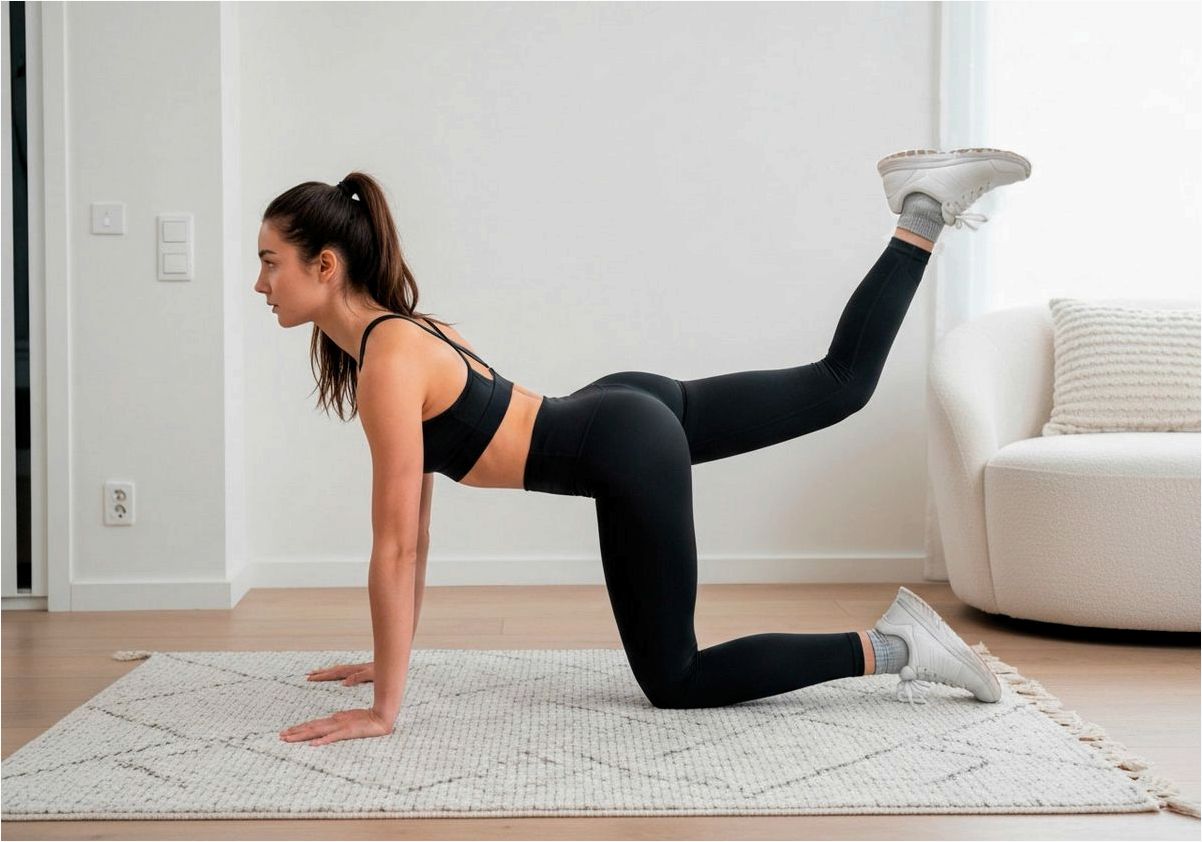
A flat stomach is great, but firm, toned glutes are considered the true hallmark of feminine attractiveness. Wanting a perfect figure and actually achieving it are two different things, but experienced trainers know which exercises will help your glutes look their best.
Article contents:
it is recommended to perform each exercise in the standard format: three sets of 15 repetitions with a 60- to 90-second rest between sets. First, complete all sets of one exercise, and only then move on to the next.
Single-leg deadlift with straight legs
- Start in a standing position with your feet together. Hold a dumbbell in your right hand with an overhand grip, letting your arm hang down alongside your body. Slightly arch your lower back, keeping your head in a neutral position.
- Bend your right knee slightly and keep your left leg straight. Slowly bend forward from the hips, lowering your torso and lifting your left leg back so that it is parallel to the floor. Engage your core, squeeze your glutes, and tighten the back of your thighs for maximum control. Perform 15 repetitions, then switch your supporting leg.
For a greater range of motion, try performing this exercise while standing on a raised surface, such as a box.
Tip: To avoid injury, control the depth of the bend and do not round your back. If you feel discomfort in your lower back, reduce the range of motion and focus on proper form.
Side step-up onto a platform with leg extension
- Stand next to an aerobic platform, positioned to the left of it.
- Step onto the platform with your right foot, then pull your stomach in and squeeze your left glute while extending your left leg backward. Hold this position for one count, then carefully place your left foot on the floor first, followed by your right. Repeat the cycle, then switch sides.
This exercise engages the adductor and abductor hip muscles , as well as the glutes. To increase the intensity, you can add weights to your legs. Pay attention to your form—avoid jumping and be careful not to strain your calf muscles
tip: Keep your pelvis level and avoid tilting it to the side; this will help engage the target muscles as much as possible.
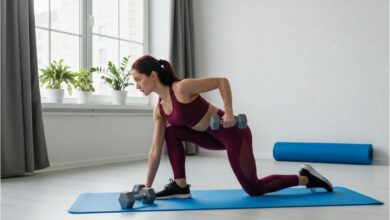
Split squat
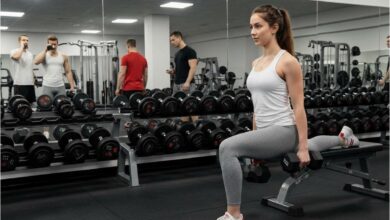
- Stand upright with your back to the bench. Extend one leg backward and place your foot on the bench so that it is almost parallel to the floor.
- Bend your front knee and gently lower yourself into a lunge, trying to keep your thighs parallel to the floor. Push off with the heel of your front foot to return to the starting position, while strongly contracting your glutes.
This exercise effectively works the gluteal muscles : some contract while others are stretched. To enhance the effect, replace the bench with an exercise ball. Focus on the vertical range of motion—do not lean forward.
Tip: Be sure to watch your front knee—it should not extend past your toes to reduce stress on the joints.
Side-to-side walking with a fitness band
- Secure the band slightly below your knees and assume a quarter-squat position with your feet wider than shoulder-width apart. The band should remain taut.
- Keeping your core engaged and your posture stable, step to the right—first with your right foot, then your left—while keeping the band taut at all times. Move in the same direction, then switch sides. If you don’t have enough space, alternate the direction of your steps.
This exercise effectively targets the area where the thighs and buttocks meet, where fat often accumulates.
Good to know: Beginners are advised to use a resistance band with lower tension and gradually increase the intensity to prevent straining muscles and ligaments.
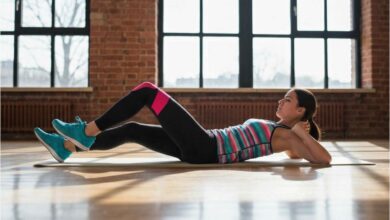
Bridge with support on a medicine ball
- Lie on your back with your knees bent and your feet resting on a stability ball.
- Pull your stomach in, tighten your glutes and the back of your thighs to lift your pelvis upward. Hold briefly at the top, then lower yourself about three-quarters of the way down while keeping your core engaged, and repeat the movement.
Focus on feeling maximum tension in the middle and lower glutes. To increase resistance, you can place a dumbbell or a barbell plate under your pelvis. Your head should remain on the floor—lifting your head during the exercise can lead to pinching of the cervical nerve.
Safety tip: Make sure your lower back doesn’t sag at the bottom of the exercise. This will protect you from overexertion and possible injury.
Wall squats with a fitness ball
- Press your back against the wall and place the fitness ball between your lower back and the wall. Place your feet wider than shoulder-width apart and turn your toes out at a 45-degree angle.
- As you lower into a squat, try to roll the ball along your back. Squat down until your quadriceps are almost parallel to the floor. Hold for a second, then push through your heels to stand up.
This exercise effectively distributes the load to the glutes and the back of the thighs without putting strain on the lower back. You can use dumbbells for added resistance.
Tip: For better results, incorporate breathing exercises — inhale as you lower yourself and exhale as you rise. This helps maintain core stability and improves movement control.
General tips for glute workouts :
- Consistency is the key to success. Continue training at least 3 times a week for noticeable results.
- Don’t forget to warm up before your workout and stretch afterward—this helps prevent injuries and speeds up recovery.
- Proper nutrition plays an important role—sufficient protein and a balanced diet are essential for muscle growth.
- Pay attention to posture and exercise form — this will help maximize activation of the gluteal muscles and prevent strain on your back and knees.
Recommendations for proper execution and injury prevention
Don’t skip stretching after your workout : Focus on your groin, hamstrings, and lower back to maintain flexibility and reduce the risk of minor injuries. Pay attention to how your body feels—sudden pain or discomfort requires you to stop immediately and adjust the intensity of your workout.
Use a progressive approach to your workouts—increase intensity or the number of repetitions gradually, avoiding overexertion. Allow at least 48 hours of recovery between workouts, especially when performing weight-bearing exercises.
Choose shoes with good cushioning and a stable sole to support your feet and reduce impact. During workouts, pay attention to the position of your pelvis and back: maintain a neutral lumbar curve to reduce the risk of spinal injuries.
Pay attention to your fatigue level: stop your workout as soon as your form starts to deteriorate. If you experience chronic pain, consult a specialist for diagnosis and adjustment of your training regimen.