Useful tips for dancers: how to develop coordination and sense of rhythm
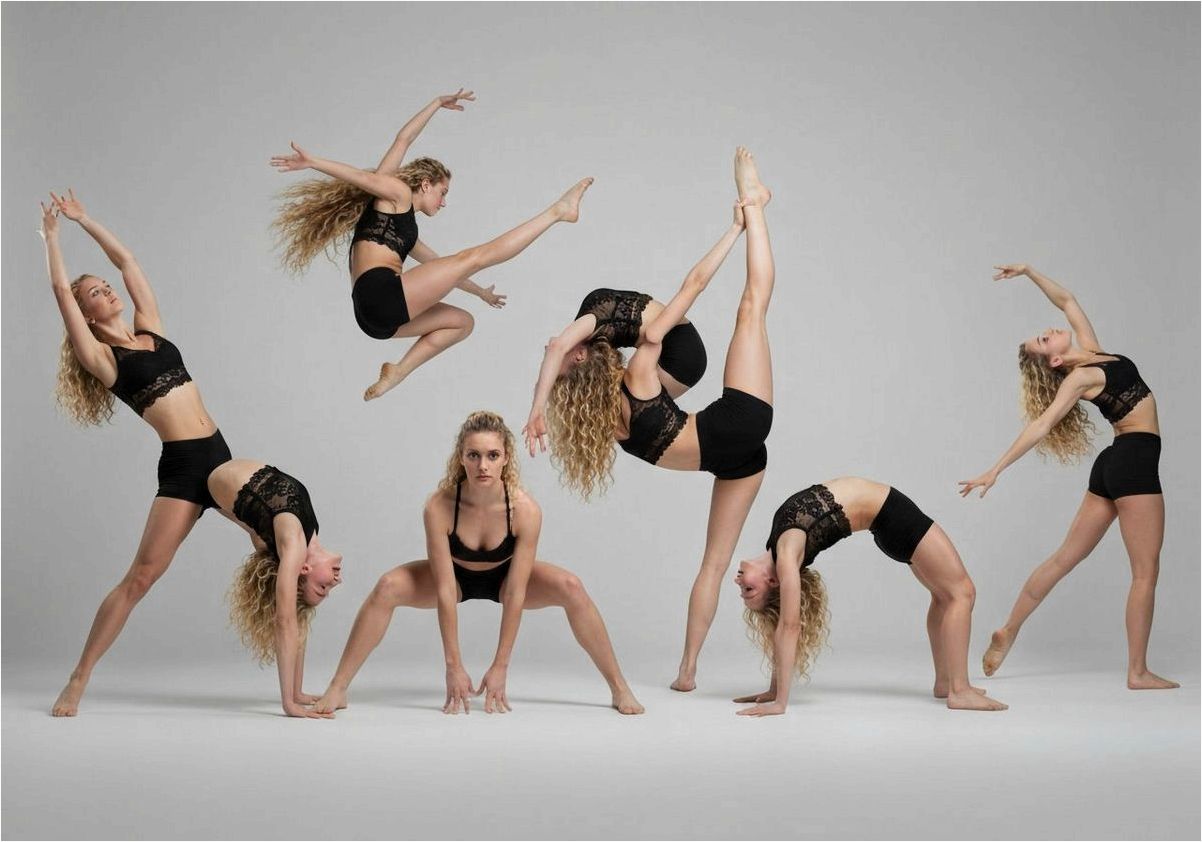
In this material, together with choreographer and dancer Andrei Kentsis, we will discuss why rhythm helps improve concentration, how to train coordination through play, and what simple movements can be implemented into everyday life.
Contents of the article:
Brain function during dance: gray and white matter
From the outside, the dance seems to be a series of smooth and rhythmic movements to music, but inside our body at this moment a complex system is activated. The eyes perceive the space and the surrounding people, the hearing catches rhythmic accents, the memory retains the sequence of movements, the motor control controls the body, and the attention tries not to miss the slightest detail. Dance requires the brain to integrate all these processes into a single flow, and it is in this multifunctional interaction that its unique benefits lie.
Scientists confirm that these types of activities significantly affect the structure of the brain. A study conducted by a group led by M. Müller showed that older people who danced for six months had an increased volume of gray matter in the motor area of the brain, and after 18 months, changes affected the areas responsible for memory. Additionally, the dancers had increased levels of BDNF, a protein that strengthens neurons and supports learning processes.
To better visualize the process, you can compare gray matter to the “data center” where information is processed, and white matter to the “wires” that connect different parts of the brain. Dance develops both of these areas: in addition to physical flexibility, the brain rebuilds its neural connections, becoming faster, more accurate and more flexible. You can think of it as updating the operating system on your computer at the same time as speeding up your Internet connection—everything starts running smoother and more efficiently.
As a result, dance becomes not only a way to express emotions, but also a powerful tool for improving cognitive functions. People who move to music report increased concentration and faster reactions in sports, driving and everyday activities. The pleasure that comes from music and movement over time turns into brain training – accessible to everyone.
In addition, dance activates other important parts of the brain associated with the emotional sphere – the limbic system, in particular the hippocampus and amygdala, which helps reduce stress levels and improve mood. Regular dancing stimulates the production of neurotransmitters – serotonin and dopamine, which play a key role in creating feelings of joy and satisfaction. This makes dance not only a useful physical and intellectual practice, but also an effective means of emotional self-regulation.
Dance also requires coordination between the hemispheres of the brain, which enhances their interaction through the corpus callosum, a large bundle of white matter that connects the left and right hemispheres. This symmetrical exchange of information improves creativity and helps you better adapt to new tasks. This is especially important in old age, when maintaining interhemispheric connections helps maintain cognitive health and prevent age-related memory impairment.
Finally, dance is associated with social activity, because many styles require joint performance with partners or a group. Moving together to music stimulates the areas of the brain responsible for empathy, understanding and communication. This increases emotional intelligence, strengthens social connections and makes activities even more motivating and beneficial for overall mental health.
The meaning of rhythm
Rhythm is the invisible basis of any dance. But it is also present in all aspects of our lives: the beating of the heart, breathing cycles, habitual steps – all this is rhythmic in nature. Rhythm can be called the internal metronome of the brain, which helps us not only in movement, but also in orientation in life. When music with a clear rhythm is played, the brain connects with this sound frame and begins to predict the further development of events. This quality is useful not only on the dance floor – the ability to predict events is important for successful adaptation and survival in everyday life.
It is not surprising that babies immediately respond to music: hearing the pulse, they begin to move to the beat and clap their hands, which indicates that their brain is already picking up and trying to synchronize with the rhythm. In an adult, this process works in exactly the same way: the more defined and understandable the rhythm, the easier it is to get involved in the movement. Therefore, beginners are advised to choose music with clearly defined accents – hip-hop, pop or electronics. Here the bass and drums create a stable “reference pulse” that does not need to be invented, it is literally felt by the body and indicates the direction of movement.
This process can be compared to the operation of a car engine: if the engine runs smoothly, the driver feels confident and relaxed. With any failures, tension and discomfort arise. It’s the same with rhythm in music – a stable, clear pulse allows the body to relax and completely trust the movement. Having mastered the skills of perceiving and maintaining rhythm, a person will be able to more easily improve coordination, master new steps and experiment in dance.
In addition, rhythm plays an important role in the development of emotional perception and social communication. Moving together in the same rhythm promotes a sense of unity, improves mood and reduces stress levels. Musical lessons based on rhythmic exercises , are used in therapy to restore motor functions and cognitive skills, which confirms the universal value of rhythm in human life. Thus, rhythm is not only a musical phenomenon, but also a powerful tool for harmonizing body and mind.
Coordination as a fun game
Coordination is the ability to simultaneously manage multiple activities and processes. In life, we constantly practice this skill: talking on the phone while walking down the street, holding a bag in our hand, watching traffic lights, or at the same time cooking and listening to a child. Dance improves this ability, but does it in a playful way. On the dance floor, the legs can set one rhythm, the arms can perform separate movements, and the eyes can follow the partner or the environment. For the brain, this is a complex multi-tasking workout, but it does not seem boring – on the contrary, everything happens with joy, games and laughter.
A simple exercise: step to the music, but clap not on each beat, but between them – for example, only on the second and fourth. At first it seems simple, but as the pace increases, the brain begins to have difficulty learning to control the legs and arms at the same time.
Another example is “mirror game with delay”: one participant shows the movements, and the second repeats them half a beat late. Often in the process, both make mistakes and laugh, but it is at such moments that the brain is rebuilt, learning to switch quickly and concentrate better.
Such games are easy to use not only in dancing. A child, playing “stop dance” with his parents, learns to instantly react and control the body. Adults, repeating the movements of their partner in the mirror, train attention and the ability to predict the actions of their interlocutor. Coordination is not about perfect execution, but about flexible adaptation to changing conditions. Dance offers the perfect opportunity in this regard: it combines serious brain training with exciting play.
Small exercises for everyday life
You don’t have to wear a stage costume to experience how dance exercise affects your brain. Small movements can be inserted directly into familiar everyday moments – and the brain will perceive them as training. In the morning, while in the elevator or walking down the stairs, turn on your favorite music and let your body gently sway to the rhythm. This will not seem strange, but will create an internal sense of rhythm for the whole day – as if you are starting your own “built-in metronome”.
If you have to wait for a bus or train, you can quietly practice familiar dance steps or simple hand movements. In the kitchen, while the coffee is brewing, turn on a music track and try to repeat a few dance elements from popular TikTok challenges. At first glance, this looks like entertainment, but for the brain it is a full-fledged workout – it activates hearing, attention and motor activity, and even a couple of minutes of such activity a day helps strengthen neural connections.
The main thing is not the complexity of the exercises, but the regularity of their implementation. Two minutes in the elevator, a few minutes in the kitchen, a couple more minutes waiting for transport – these small actions add up to a useful habit that serves as a real neuro-charger. Over time, you will notice that you become more focused, react faster, and feel more energized. In this case, dancing becomes not a separate load, but a constant way to keep the brain in shape.
Mistakes are part of the fun
Mistakes are an integral part of dancing. Even experienced performers sometimes have problems – the step does not coincide with the music, the movement is forgotten or performed at the wrong moment. However, it is these inconsistencies that make the learning process valuable. When the step diverges from the rhythm, the brain looks for a way to adapt, to catch up with the musical pulse, and it is at this moment that new neural connections are formed – that is, a restructuring of the brain occurs. Mistakes become not failures, but catalysts for learning.
If you remember the process of teaching a child to walk, he constantly falls and gets up again, improving the skill. The situation is similar for adults: they learn through attempts, mistakes and adjustments. Dance is a safe and friendly platform for such experiments: mistakes here do not have catastrophic consequences, but only mean a slight miscalculation or a wrong step to the side.
Equally important is that the joy of movement enhances the educational effect. When dancing with pleasure, the brain releases dopamine, a motivational hormone that helps reinforce new skills and awakens the desire to repeat the experience over and over again.
Thus, dance is not about perfection or mistakes, but about freedom of expression.