10 Effective Stretches for All Muscle Groups
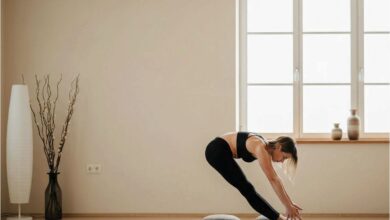
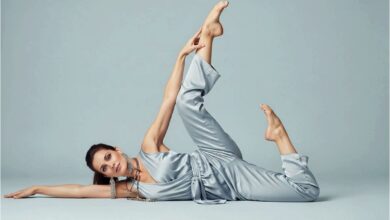
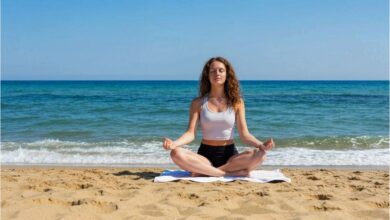
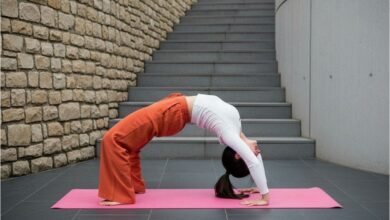
These exercises can easily be combined into a routine for a full-body stretch or used individually as a cool-down after workouts to relieve muscle tension and improve tissue flexibility.
Article Contents:
Trapezius Stretch
Starting position: Sit cross-legged, straighten your back, clasp your hands behind your head, spread your elbows to the sides, open your chest, and keep your neck straight. Lower your chin toward your chest, bring your elbows together, and apply light pressure to the back of your head with your palms. Hold this position for 15 counts.
Mistakes to avoid: a rounded back and elbows pointing forward.
To enhance the effect, take a few deep breaths, focusing on relaxing your neck and shoulders. If you feel discomfort, reduce the pressure of your palms.
Back Muscle Stretch
Starting position: Sit cross-legged, keep your back straight, clasp your hands together in front of your chest, spread your elbows out to the sides, and lower your shoulders. Gently round your back, relax your abdominal muscles, and reach your arms as far forward as possible. Hold your breath.
Common mistakes: not rounding the back enough.
Remember that it’s not the length of time in the pose that matters, but the quality of relaxation. Gradually increase the range of the stretch while maintaining even, calm breathing.
Chest Muscle Stretch
Starting position: Sit cross-legged, ensure your spine is in a neutral position, place your hands behind your back on your lower back, open your shoulders and chest, and lift your chin slightly. Pulling your elbows back, bring your shoulder blades together and arch your lower back as much as possible.
Common mistakes: elbows not pulled back far enough, chin dropped, chest not protruding, shoulders raised toward the ears.
To deepen the stretch, you can gently lift your chest, imagining that space is appearing between your shoulder blades. This will help enhance the effect and improve posture
Gluteal Muscle Stretch
Starting position: Sit on a mat, reach your arms back, and place your palms flat on the floor. Bend your left knee, keeping your foot flat on the floor. Place your right ankle on your left knee, with your right knee pointing out to the side. Keep your shoulders relaxed, your shoulder blades pulled together, and your back straight; try not to twist your hips. Without changing the position of your torso, pull the toe of your supporting leg toward you. Repeat the same for the other leg.
Common mistakes: a hunched or slumped back, limited range of motion.
To increase the stretch, you can lean slightly forward from the hips while keeping your back straight. If you experience knee pain, reduce the angle of leg abduction.
Stretching the oblique abdominal muscles
Starting position: sitting cross-legged, right arm extended backward and resting on the floor, left palm resting on the right knee. Push off your knee with your hand and smoothly turn your shoulders and head to the side, twisting your torso at the waist. Breathe evenly, abdominal muscles relaxed. Hold this position, then slowly return to the starting point. Repeat on the other side.
Common mistakes: insufficient torso rotation, sudden movements, holding your breath, and tensing your abdominal muscles.
Ideally, make the twists smooth and controlled, keeping your abdominal muscles relaxed. Inhale in the starting position and exhale during the twist to enhance relaxation.
Stretching the abdominal and spinal muscles
Starting position: Lie on your stomach with your elbows on the floor; keep your back and shoulders relaxed. Lift your chin, pull your shoulder blades together, and arch your upper body upward, feeling the tension in your back muscles. Hold the position without holding your breath. Slowly lower yourself back down.
Mistakes to avoid: excessive arching of the spine and sudden jerks.
If you experience discomfort in your lower back, bend your arms slightly at the elbows or reduce the range of motion. Over time, your flexibility will improve.
Stretching the back of the legs
Starting position: sitting on the floor, right leg straight, hips parallel without twisting. Left leg bent at the knee, knee pointing to the side. Place your palms on the floor on either side of your straight leg and, slowly moving your hands forward, reach toward your toes. Stop when you feel a stretch in the muscles of the back of your thigh.
Common mistakes: twisting the torso, a rounded back, and sudden movements.
The stretch will be more effective with a pointed foot; pulling your toes toward you activates additional contraction of the calf muscles and enhances the stretching sensation.
Stretching the latissimus dorsi
Starting position: Sit cross-legged. Rest your right hand on the floor, and extend your left arm upward. Slowly lean your torso to the side, keeping your supporting elbow on the floor, and reach out to the side with your left arm. Then repeat the movement on the other side.
Common mistakes: Rounding the back.
To avoid mistakes, mentally extend your tailbone downward and in the opposite direction of the bend, keeping your chest open and your back straight.
Stretching the deltoid muscle
Starting position: sitting cross-legged, straighten your back. Your right arm is perpendicular to your torso; your left arm supports the right from below and applies light pressure backward. Do not rotate your shoulders to the side. Hold for a few seconds, then switch arms and repeat.
Common mistakes: rotating the shoulders toward the working arm.
If you feel significant tension, you can reduce the pressure slightly and perform the stretch with a small range of motion, gradually increasing the depth.
Triceps stretch
Starting position: Sit cross-legged. Raise your left arm straight up, and grasp it by the elbow with your right hand. Bend your left arm so that your palm slides down your back along your spine. Gently press on your elbow with your other hand. Hold, then switch arms and repeat the exercise
Mistakes: leaning your torso to the side while performing the exercise.
For a more comfortable stretch, keep your body straight and steady. If you have trouble reaching your back, use a towel or a strap, holding it with both hands for extra support.