Pilates at Home: How Just 20 Minutes a Day Can Transform Your Body
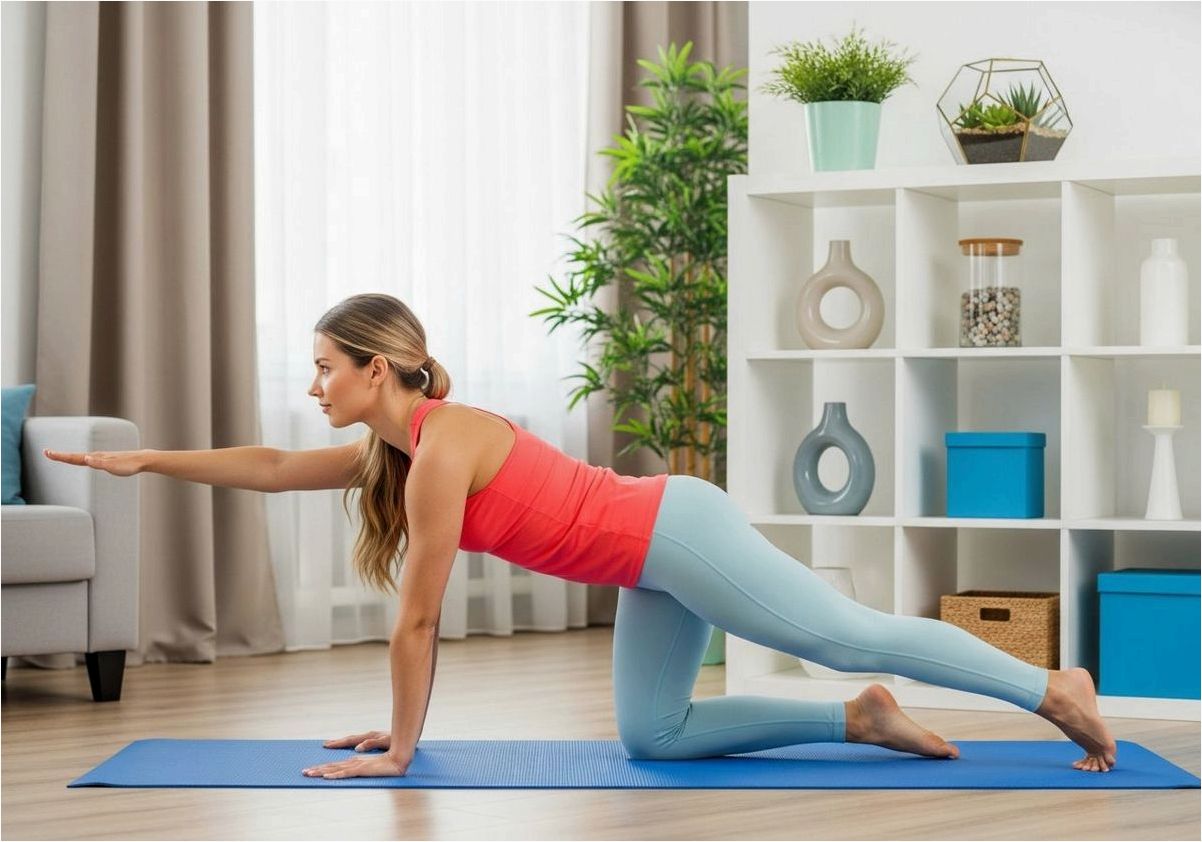
It is commonly believed that Pilates can only be practiced in specialized studios with expensive equipment and under the supervision of a trainer. However, modern science and years of experience show that impressive results can also be achieved by performing a well-designed set of exercises at home.
Article contents:
Why choose Pilates
Pilates is considered one of the gentlest yet most effective forms of physical activity, thanks to its minimal impact on the joints. It is suitable for people of all ages and fitness levels. A study published in the Journal of Physical Therapy Science in 2014 noted that regular Pilates practice significantly improves balance, especially in older women. Additionally, findings from researchers at the University of South Australia show that Pilates helps reduce lower back pain and promotes proper posture among office workers.
The main benefits of Pilates include:
- Strengthening the deep abdominal and back muscles;
- Improving joint flexibility and mobility;
- Improved coordination and balance;
- Posture correction;
- Reduced risk of injury;
- Support for maintaining a healthy weight;
- Improved mental well-being through mindful breathing and body awareness.
Home workout: 7 exercises in 20 minutes
The entire routine can be performed using only a mat or a thick towel. The exercises target the major muscle groups—abs, glutes, arms, shoulders, and back. The program includes 7 exercises, each performed for 8–10 repetitions.
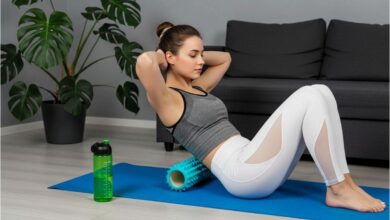
Half Roll-Down
This exercise strengthens the abs and back muscles while warming up the body before the main workout.
- Sit on a mat, bend your knees, place your feet on the floor, and rest your hands on your thighs.
- As you exhale, pull your abdomen in, drawing your navel toward your spine, and tilt your pelvis backward, rounding your lower back.
- Slowly lower yourself backward, arching your spine vertebra by vertebra until your lower back touches the floor.
- As you inhale, tighten your glutes and hamstrings, and return to the starting position.
- Repeat 8 times.
Glute Bridge
This exercise targets the glutes, hamstrings, and lower abs. According to an article in the *Archives of Physical Medicine and Rehabilitation* (2017), it effectively activates the deep pelvic stabilizer muscles.
- Lie on your back, bend your knees, place your feet on the floor hip-width apart, and extend your arms alongside your body.
- As you exhale, press your lower back into the floor and lift your pelvis, feeling the tension in your glutes.
- Hold at the top for 1 second, then slowly lower yourself down.
- Perform 8 repetitions.
Leg Swings
Strengthen the leg muscles, develop stability, and improve balance. Especially useful for coordination.
- Stand on one Pilates brick, shift your weight to your left leg, and lift your right leg slightly off the floor.
- While maintaining your balance, swing your right leg back and forth.
- Do 8–10 repetitions, then perform circular movements to the right and left 8–10 times each.
- Repeat the exercise with the other leg.
Side Plank
Works the oblique abdominal muscles, improves balance, and strengthens the core.
- Assume a side plank position on your right forearm, legs straight, with your left leg resting on top of your right.
- Lift your hips so that your body forms a straight line from head to heels.
- Raise your left arm upward and hold the position for 10 seconds.
- Then repeat on the other side.
- Perform 8 repetitions on each side.
Leg Lifts and Lowering
One of the best exercises for strengthening the lower abs. According to a study by the University of Wisconsin-Madison, it is the lower abdomen that activates the deep transverse abdominis muscle.
- Lie on your back, place your palms under your buttocks, fingers pointing down.
- Raise your straightened legs vertically, heels together, toes pointing outward.
- As you exhale, slowly lower your legs to an angle of about 45 degrees, then return to the starting position.
- Repeat 8 times.
Cross-Body Movements
Develops the oblique abdominal muscles and helps improve spinal mobility.
- Lie on your back, place your hands behind your head, knees bent, shins parallel to the floor.
- As you exhale, lift your head and shoulders, twist your torso, bringing your right elbow toward your left knee while simultaneously extending your right leg.
- Repeat the exercise on the opposite side.
- Perform 8 repetitions on each side.
Pilates Push-Up
Focuses on the triceps, shoulders, and core. Unlike a classic push-up, the emphasis is on control and engaging the core.
- Assume a plank position, with your hands under your shoulders; your body should remain straight.
- As you inhale, bend your elbows and lower your body; as you exhale, return to the starting position.
- Perform 8 repetitions.
Tips for Beginners and Experienced Practitioners
If you’re just starting out:
- Don’t focus on speed—technique and control of your movements are what matter most.
- If possible, start with classes led by an instructor to properly master the fundamental principles of Pilates.
- Plan your workouts in advance—even 20 minutes of regular practice yields noticeable results.
- Don’t worry if everything doesn’t go perfectly right away—progress comes with practice.
- Pay attention to your breathing—deep inhalations and exhalations help activate your abdominal muscles and calm your nervous system.
For experienced students:
- Try more challenging variations of the exercises, such as those with unstable support or with straight legs.
- Add training equipment: a stability ball, resistance bands, or a Pilates ring.
- Deepen your basic exercises by focusing more on your breathing and movement control to increase their effectiveness.
Pilates is a versatile method for achieving harmony between body and mind. It doesn’t require a lot of space, expensive equipment, or special physical conditioning. Just 20 minutes a day is enough to strengthen your muscles, improve your posture, increase your flexibility, and feel a surge of energy. The key to success is consistency and proper technique. According to Harvard Health Publishing, regular low-impact workouts such as Pilates not only improve physical fitness but also help reduce stress and anxiety.
Incorporate this short but effective routine into your daily practice—and you’ll soon notice how your body becomes stronger and your mind calmer.