Reiki Meditation: Key Features, Guidelines, and Techniques
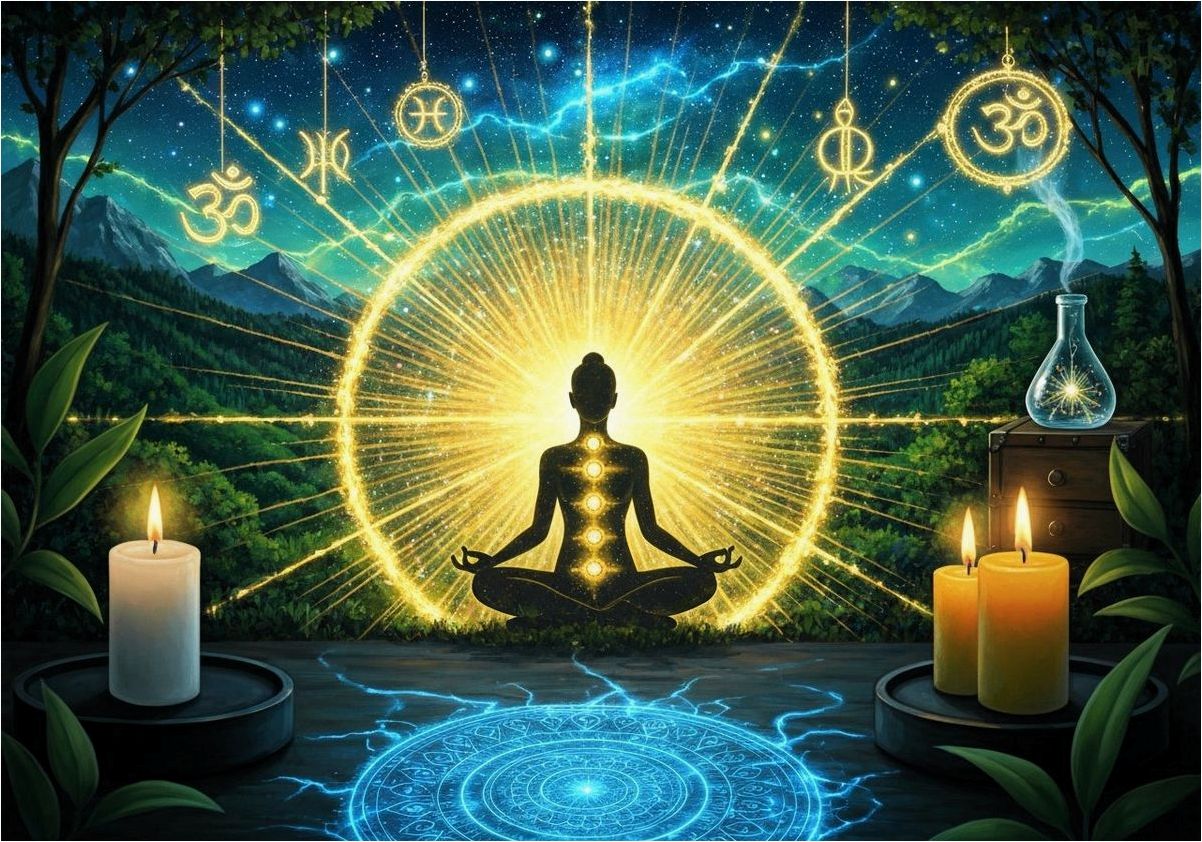
Over the past three decades, meditation has gained immense popularity: people use it to calm the nervous system, relax the body, develop mindfulness, and establish a deep connection with themselves. However, not everyone knows that meditation can not only improve one’s emotional state but also completely transform one’s life. Psychologist and Reiki practitioner Daria Magic shares more details on this.
Article contents:
What is Reiki meditation?
Reiki meditation (where “rei” means soul and “ki” means energy) is a Japanese relaxation technique based on focusing one’s attention on the universal energy that permeates all living things. According to Japanese philosophy, everything around us—people, objects, plants—is made up of energy. Everything exists as part of a single universal flow that sustains and nourishes; this is Reiki energy.
Conventional meditation engages only the subconscious mind, influencing one’s inner world. Reiki practice, however, works simultaneously with both the subconscious and the energy field. Thanks to this, it is possible to tackle a variety of tasks more quickly and effectively. After all, traditional meditation removes mental barriers but does not affect the energy centers—the chakras, the aura, the subtle bodies, and the physical body.
During meditation, attention is focused on external and internal energy. In the process of practice, a person not only observes this energy-information field but also learns to control it, using their intentions as a kind of catalyst.
In addition, Reiki meditation helps harmonize all levels of a person—physical, emotional, mental, and spiritual. Regular practice helps improve overall well-being, increase vitality, and stabilize emotional states. Practitioners also note the development of intuition and a deeper inner understanding of their path.
To begin practicing Reiki, it is generally recommended to undergo special training with a master, who transmits energy and knowledge through an initiation (attunement). Afterward, the practitioner is able to use the technique independently, both for self-care and to help others—for example, during a healing session or to provide support during stressful situations.
It is important to remember that Reiki meditation does not conflict with conventional medicine; rather, it can serve as a complementary tool for restoring balance and maintaining health. It does not replace medical care, but it helps accelerate the body’s natural healing processes and strengthen the immune system.
How does a Reiki meditation session work?
There are many Reiki meditation techniques, each of which is aimed at specific goals: spiritual development, achieving relaxation, restoring health, or resolving everyday issues. All methods are united by the integration of intention and energy. For example, when dealing with digestive issues, the practitioner can focus on normalizing gastrointestinal function. If the goal is to build a harmonious relationship with a partner, such goals are also addressed during a Reiki meditation session.
The main form of practice is a session, but given the creative nature of Reiki, instructors often supplement the session with methods from related fields—such as psychology or Theta Healing. Reiki practice is universal: it has no contraindications and can be combined with other systems of self-discovery, enhancing their effects. For beginners who have not yet been initiated, meditations with a Reiki healer—even those recorded remotely—will prove useful; the technique works entirely at a distance.
Step-by-step instructions for practicing Reiki meditation on your own
- Place your palms together in the gassho gesture (the Japanese term “gassho” means “two hands pressed together” — a gesture familiar in many cultures, symbolizing unity and focusing energy at the heart level). Say three times: “Reiki, Reiki, Reiki, please come to me.”
- Wait for a few minutes until you feel warmth in your palms.
- Form a clear request for energy in your mind, for example: “Fill my body with strength and restore my health,” “Relieve my headache,” “Reduce inflammation in my joints,” “Relieve tension in my lower back,” and so on.
- Place your hands on the part of the body you are intuitively drawn to, or maintain the gassho position.
- Remain in this state for five minutes to an hour, visualizing your request being fulfilled in the best possible way. There is no set time limit.
- If you moved your palms, return them to the gassho position and express gratitude to the energy.
- Don’t rush to end the practice right away; take another 5 minutes to feel inner peace and unity with the energy and yourself.
- To ground yourself, end the session with a light household activity: wash the dishes, dust, organize your belongings, or take a walk outdoors.
This meditation method is available if you have received a Reiki attunement. If you have not been initiated, close your eyes before practicing, place your palms together in the gassho position, and recite the five Reiki principles:
• Do not worry today.
• Do not get angry today.
• Be kind to others today.
• Work hard.
• Be grateful.
Remain in this position for 1–2 minutes, take a few deep breaths, and you will feel a noticeable improvement in your well-being.