Jumping on a stand: an effective exercise for developing strength, coordination and endurance
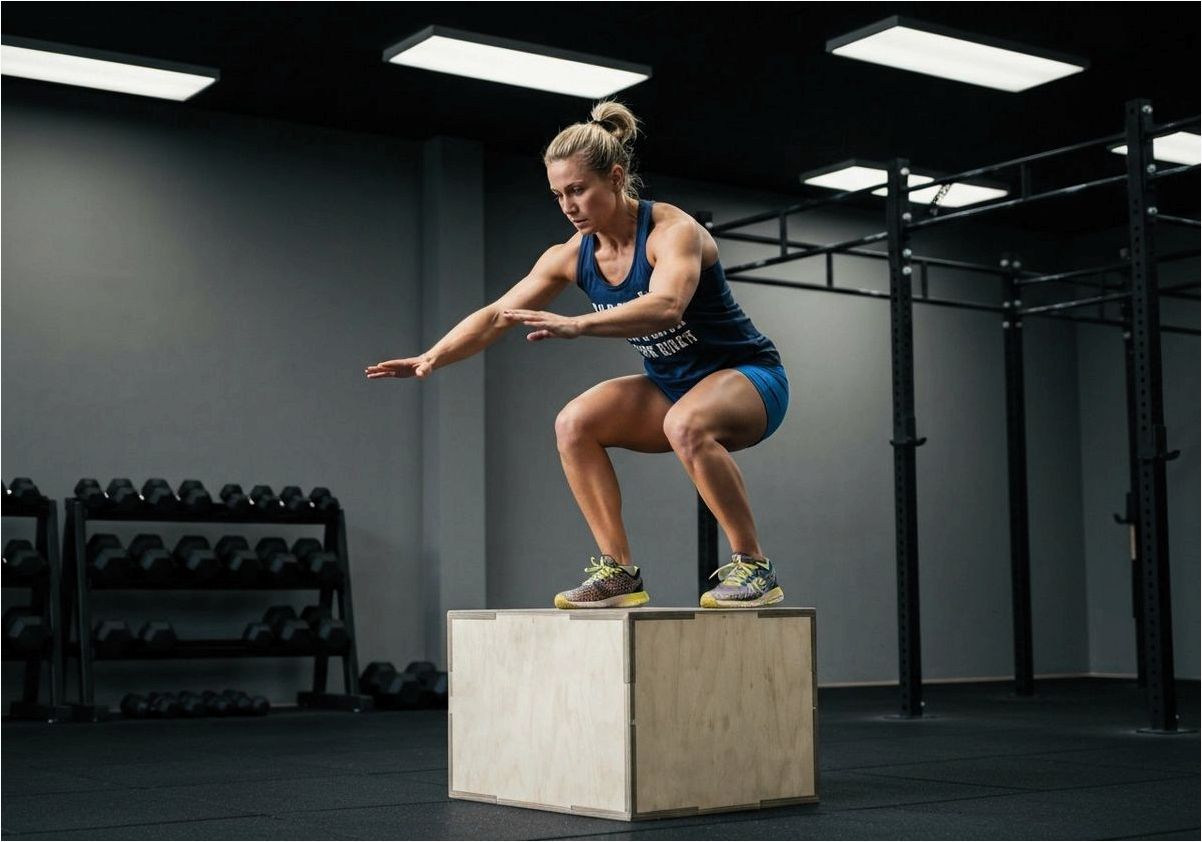
In modern fitness, plyometric exercises occupy a key place due to their ability to increase explosive strength, speed and coordination. One of the most common and effective movements of this type is box jumps. Despite the fact that in everyday life we rarely make fast jumps, this exercise is recommended to be included in the program training everyone who wants to improve their overall physical fitness, increase endurance and achieve sports success. It is especially useful for fans of team games, runners, or those who seek to enhance the effect of standard sports activities.
Contents of the article:
Correct jump technique
Jumping jacks are a dynamic exercise that primarily activates the muscles of the lower body. Follow these steps for correct execution:
- Take your starting position in front of the platform: feet hip-width apart, arms extended forward at chest level, elbows slightly bent.
- Bend your knees slightly, at the same time bring your arms back, then push off the floor with a powerful push of your legs, raising your arms forward and up.
- Land on the surface of the counter with both feet, keeping your knees bent at approximately a 90-degree angle.
- Straighten your body, stand fully, and then carefully step back from the stand – avoid jumping down so as not to place unnecessary stress on your joints.
It is very important to remember that control over technique and quality of workmanship are more important than the height of the cabinet used. It is recommended to start with a low platform and gradually increase its height.
The main benefits of jumping on a stand
Improving sports performance
This classic plyometric exercise helps increase explosive power and speed. According to a study published in the Journal of Human Kinetics in 2020, regular plyometric training positively impacts jumping performance and speed in athletes in team sports, including football, basketball, and handball. Improvements in vertical jump, acceleration, and agility are observed with just 2-3 sessions per week for 4-16 weeks.
Furthermore, jumping develops cognitive agility—the ability to react quickly, coordinate movements, and effectively control the body in space. Due to this effect, the exercise is beneficial not only for physical fitness but also for mental abilities.
Strengthening muscle tissue and tendons
The primary mechanism during jumping is based on the cycle of muscle stretching and contraction Muscles initially undergo stretching (eccentric phase), storing energy, which is then suddenly released through a powerful contraction (concentric phase). Research published in the Journal of Applied Physiology in 2018 confirms that this type of exercise improves muscle and tendon elasticity, particularly in the lower extremities this quality makes jumping an excellent way to improve mobility, enhance agility, and reduce the risk of injury, which is especially important for athletes and active individuals.
Cardio Workout Without Running
Cardio without running
Therefore, incorporating jumping into your training regimen helps develop overall endurance, even with sessions lasting only about 15 minutes.
What muscles are involved in jumping onto a box?
What muscles are involved when jumping onto a stand?
Quadriceps (front of the thigh) – responsible for propulsion and stabilization of the knee joint;
- Gluteal muscles – provide hip extension and pelvic support;
- Hamstrings (back of the thigh) – involved in hip extension and knee flexion;
- Gastrocnemius muscles – responsible for leg push-off and ankle stabilization;
- Core muscles are important for spinal stability and coordination during both takeoff and landing.
- In addition to these primary muscle groups, other muscles are actively engaged when jumping onto a box, ensuring a complex movement and safe execution of the exercise:
Tibialis anterior
- muscle – helps control the movement of the foot and prevents excessive flexion upon landing; Hip and pelvic stabilizer muscles (e. g., the gluteus medius) – ensure proper body position and balance during the jump; deltoid and shoulder girdle muscles – participate in swinging the arms to increase propulsion and maintain balance;
- Back muscles – help maintain proper posture
- and help transfer power from the core to the legs;
- Proper breathing technique and movement rhythm are also important for effectively engaging all muscles and preventing injury. Regular stretching and warm-up improve muscle elasticity and joint mobility, which contributes to better box jump performance Exercise variations: beginner to advanced simple alternative: vertical jump
If you’re not yet ready for a full-fledged box jump, start with vertical jumps in place. This is a safe way to develop explosive power without special equipment, ideal for beginners and those recovering from injuries. Perform 3-4 sets of 10-15 reps, focusing on the amplitude and softness of the landing to minimize stress on the joints.
Exercise variations: from beginner to advanced level
Simple Alternative: Vertical Jump
Advanced: Single-Leg Jump
Simplified training: snap down
Progression tip: Before moving on to more challenging variations, ensure proper technique and absence of pain. Gradually increase the height and load, combining jumps with lower-body strength exercises, such as squats and lunges, to build a foundation for effective and safe plyometric exercises. Common Mistakes and Recommendations for Correcting Them
Advanced level: one leg jump
It’s equally important to maintain a proper landing position: it should be soft, with bent knees and active core engagement A hard landing increases the strain on the knees and spine, which can lead to injury it’s also important to warm up and stretch before training. A good warm-up improves blood circulation and reduces the risk of strains or overexertion. Stretching increases muscle and joint elasticity, which improves range of motion and reduces the risk of injury. Remember to control your breathing during jumps: a deep, even inhalation before takeoff and an exhalation upon landing help stabilize the body and improve concentration If you feel fatigue or joint discomfort, it’s best to take a break or reduce the intensity of your workout. Ignoring pain can lead to chronic problems finally, regularly analyzing your workouts using videos or a trainer will help you identify technique errors and correct them promptly, significantly increasing the effectiveness and safety of your workouts.
How to include jumping jacks into your training process Before adding this exercise to your program, make sure you have the necessary physical qualities: strength leg muscles
Typical errors and recommendations for eliminating them
Before mastering jumping, it is advisable to strengthen the core muscles with the help of classic exercises – squats, deadlifts and lunges. This foundation will help you perform jumps safely and effectively.
Once you have mastered the technique, start with 2-3 sets of 3-5 repetitions, performing the exercise at the beginning of your workout. Do not forget about proper rest between series – the exercise puts a lot of stress on the nervous system, and fatigue increases the risk of injury Bottom line jumping on a stand is not easy
fashionable
exercise from social networks, but a powerful complex that combines the development of strength, endurance, coordination and cardio. When done correctly, they become an important part of a comprehensive workout and help improve fitness regardless of fitness level. The key to success is gradualism, attention to technique and a willingness to take on new challenges. After all, the main benefit of such exercises is not only strengthening the body, but also overcoming one’s own limitations.
Jumping on a stand: an effective exercise for developing strength, coordination and endurance
How to include jumping jacks into your training process
Bottom line